
The Madaxeman
Madaxeman.com's Home Page
  • Home
  • Latest Posts
  • Links Page
  • Battle Reports
  • ADLG Index
  • ADLG Wiki
  • Malifaux
  • C London Club
  • 15mm Gallery
  • 15mm Suppliers
  • Facebook
  • The Podcast
  • 10mm
  • Consent Preferences
 RSS Feed

Madaxemans 10mm & Real World Photo Gallery

Photos from museums, and from my 10mm wargaming collection

  • Home
  • Login
  • Album list
    • Last uploads
    • Last comments
    • Most viewed
    • Top rated
    • By date
    • My Favorites
  • Search

The 10mm & Real World Museums Photo Directory - helping you choose the best 10mm tanks, or dig out real cammo schemes from tanks and other military vehicles in museums and shows around the world. You can also search the directory by manufacturer, army or keyword

Anyone can rate the photos just by clicking on the stars beneath each photo. Ratings use a scale of 0-5 where 5 = excellent and 0 = terrible.

Home > Museums and Shows > Bovington

Most viewed - Bovington
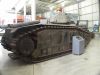
PICT1740.JPG
Char B 117 viewsAmong the most powerfully armed and armoured tanks of its day, the type was very effective in direct confrontations with German armour in 1940 during the Battle of France, but slow speed and high fuel consumption made it ill-adapted to the war of movement then being fought. After the defeat of France captured Char B1 (bis) would be used by Germany, with some rebuilt as flamethrowers or mechanised artillery
PICT1761.JPG
The Tiger I117 viewsFrom a 30 degree angle the Tiger's 88mm gun was capable of penetrating the front glacis plate of an American M4 Sherman between 1,800 and 2,100 m (1.1 and 1.3 mi), the British Churchill IV between 1,100 and 1,700 m (0.68 and 1.1 mi), the Soviet T-34 between 800 and 1,400 m (0.50 and 0.87 mi), and the Soviet IS-2 between 100 and 300 m (0.062 and 0.19 mi)
PICT1762.JPG
Matilda II117 viewsThe tank's suspension system was that which had been developed by Vickers for their Medium C prototype in the mid-1920s.[22] The tank was carried by five double wheel bogies on each side. Four of the bogies were on bellcranks in pairs with a common horizontal coil spring. The fifth, rearmost, bogie was sprung against a hull bracket. Between the first bogie and the idler wheel was a larger diameter vertically sprung "jockey wheel"
IMGP0577.JPG
Goliath116 viewsThe Goliath tracked mine - complete German name: Leichter Ladungsträger Goliath (Sd.Kfz. 302/303a/303b) - was a remote controlled German-engineered demolition vehicle, also known as the beetle tank Employed by the Wehrmacht during World War II, this caterpillar-tracked vehicle was approximately 4 feet (1.2 m) long, 2 feet (0.61 m) wide, and 1 foot (0.30 m) tall. It carried 75–100 kilograms (170–220 lb) of high explosives and was intended to be used for multiple purposes, such as destroying tanks, disrupting dense infantry formations, and demolition of buildings and bridges.
PICT1760.JPG
The Tiger I116 viewsMany modifications were introduced during the production run to improve automotive performance, firepower and protection. Simplification of the design was implemented, along with adjustments for shortages. In 1942 alone, at least six revisions were made, starting with the removal of the Vorpanzer (frontal armour shield) from the pre-production models in April. In May, mudguards bolted onto the side of the pre-production run were added, while removable mudguards saw full incorporation in September.
PICT1772.JPG
T34/85116 viewsThe T-34 was a Soviet medium tank produced from 1940 to 1958. When it first appeared on the battlefield in 1941, German tank generals von Kleist and Guderian called it "the deadliest tank in the world."
PICT1778.JPG
Panther116 viewsThe Panther's excellent combination of firepower, mobility, and protection served as a benchmark for other nations' late war and post-war tank designs, and it is regarded as one of the best tanks of World War II
PICT1784.JPG
T34/85116 viewsFollowing the end of the war, a further 2,701 T-34s were built prior to the end of production. Under license, production was restarted in Poland (1951–55) and Czechoslovakia (1951–58), where 1,380 and 3,185 T-34-85s were made, respectively, by 1956
PICT1797.JPG
Humber Armoured Car116 viewsThe vehicle was used in the North African Campaign from late 1941 by the 11th Hussars and other units. It was also widely used in the European theatre by reconnaissance regiments of British and Canadian infantry divisions. A few vehicles were used for patrol duty along the Iran supply route. The Humber armoured car was also used in Burma.
A captured vehicle (a Mk IV) was used by the Aufklärungs Abt of the 9th SS Panzer Division Hohenstaufen at Arnhem
IMGP0600.JPG
King Tiger showing Zimmerit115 viewsZimmerit was a non-magnetic coating produced for German armored fighting vehicles during World War II for the purpose of combating magnetically attached anti-tank mines, although Germany was the only country to use magnetically adhered mines against tanks in any significant number. It was developed by the German company Chemische Werke Zimmer AG
270 files on 27 page(s) 1 - 13 14 15 16 17 18 19 20 21 22 - 27


Visit Madaxeman on

Youtube Logo
Blogger Logo
Facebook Logo
Podbean Logo
Twitter Logo
Spotify Logo
Pinterest Logo
iTunes Logo
Tune In Logo

Podcasts to download from Madaxeman.com

(Also available on Podbean, iTunes and Spotify)


(These are "affiliate links". If you buy something after clicking on them I get a small kickback from eBay)

Page Loads for the 10mm & Museums Gallery:

About This Site & Privacy Information

Powered by Coppermine Photo Gallery