
The Madaxeman
Madaxeman.com's Home Page
  • Home
  • Latest Posts
  • Links Page
  • Battle Reports
  • ADLG Index
  • ADLG Wiki
  • Malifaux
  • C London Club
  • 15mm Gallery
  • 15mm Suppliers
  • Facebook
  • The Podcast
  • 10mm
  • Consent Preferences
 RSS Feed

Madaxemans 10mm & Real World Photo Gallery

Photos from museums, and from my 10mm wargaming collection

  • Home
  • Login
  • Album list
    • Last uploads
    • Last comments
    • Most viewed
    • Top rated
    • By date
    • My Favorites
  • Search

The 10mm & Real World Museums Photo Directory - helping you choose the best 10mm tanks, or dig out real cammo schemes from tanks and other military vehicles in museums and shows around the world. You can also search the directory by manufacturer, army or keyword

Anyone can rate the photos just by clicking on the stars beneath each photo. Ratings use a scale of 0-5 where 5 = excellent and 0 = terrible.

Home > Museums and Shows > Bovington

Most viewed - Bovington
PICT1766.JPG
Lee/Grant141 viewsBritish Lees and Grants were in action against Rommel's forces at the disastrous Battle of Gazala on 27 May that year. They continued to serve in North Africa until the end of that campaign. A regiment of M3 Mediums was also used by the U.S. 1st Armored Division in North Africa. In the North African campaign, the M3 was generally appreciated for its mechanical reliability, good armor and heavy firepower.
PICT1788.JPG
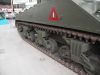
Sherman141 viewsThe Army had seven main sub-designations for M4 variants during production: M4, M4A1, M4A2, M4A3, M4A4, M4A5, and M4A6. These designations did not necessarily indicate linear improvement: for example, A4 was not meant to indicate it was better than the A3. These sub-types indicated standardized production variations, which were in fact often manufactured concurrently at different locations
PICT1714.JPG
WW1 Tank140 viewsThe prototype Mark I, ready in December 1915, was called "Mother" (previous names having been "The Wilson Machine", "Big Willie", and "His Majesty's Land Ship Centipede"). Mother was successfully demonstrated to the Landships Committee in early 1916; it was run around a course simulating the front including trenches, parapets, craters and barbed wire obstacles
PICT1726.JPG
Vickers Mk E Tank140 viewsThe Vickers 6-Ton Tank or Vickers Mark E was a British light tank designed as a private project at Vickers. It was not purchased by the British Army, but was picked up by a large number of foreign armed forces and was copied almost exactly by the Soviets as the T-26. It was also the direct predecessor of the Polish 7TP tank. By the start of World War II it was the second most common tank design in the world after the Renault FT.
PICT1758.JPG
The Tiger I140 viewsAlthough the general design and layout were broadly similar to the previous medium tank, the Panzer IV, the Tiger weighed more than twice as much. This was due to its substantially thicker armour, the larger main gun, greater volume of fuel and ammunition storage, larger engine, and more solidly-built transmission and suspension.
PICT1719.JPG
Lanchester Armoured Car139 viewsIn January 1929 the first Lanchesters (along with Rolls-Royce Armoured Cars) were received by the 11th Hussars regiment. Because of slow rate of delivery, it took until 1934 to fully equip the unit. In November the regiment was relocated to Egypt to relieve the 12th Royal Lancers, which returned to Britain and took over the cars. In January-February 1935 a provisional D squadron of the 12th Lancers with eight armoured cars served as a peacekeeping force in the Saar region. On 31 December B and C squadrons were sent again to Egypt with 29 armoured cars as a response to the Italian invasion of Abyssinia and strengthening garrisons in Libya. They were used in patrolling the western frontier.
PICT1742.JPG
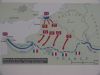
Not a plan of attack and retreat you want to see139 viewsHannibal would be very disappointed..
PICT1764.JPG
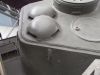
The Tiger I139 viewsThis is the colour to paint hose spades on your 15mm models..
PICT1736.JPG
Mk IV A13 Mk II138 viewsThe A13 MkII, Cruiser Tank Mk IV, had a maximum armour thickness of 30 mm, and faceted armour was mounted on the original turret's sides and rear. This gave the tank a far more modern appearance. Some Mk III tanks were re-built to Mk IV standard while at the factory.
PICT1757.JPG
Matilda II138 viewsWhile the Matilda possessed a degree of protection that was then unmatched in the North African theatre, the sheer weight of the armour mounted on the vehicle contributed to a very low average speed of about 6 mph (9.7 km/h) on desert terrain. At the time, this was not thought to be a problem since British infantry tank doctrine prioritized heavy armour and trench-crossing ability over speed and cross-country mobility (which was considered to be characteristic of cruiser tanks such as the Crusader)
270 files on 27 page(s) 1 - 15 16 17 18 19 20 21 22 23 24 - 27


Visit Madaxeman on

Youtube Logo
Blogger Logo
Facebook Logo
Podbean Logo
Twitter Logo
Spotify Logo
Pinterest Logo
iTunes Logo
Tune In Logo

Podcasts to download from Madaxeman.com

(Also available on Podbean, iTunes and Spotify)


(These are "affiliate links". If you buy something after clicking on them I get a small kickback from eBay)

Page Loads for the 10mm & Museums Gallery:

About This Site & Privacy Information

Powered by Coppermine Photo Gallery