

The Year 1106 at Devizes 2026
Christian Nubian vs Ghaznavid
Game 1 Christian Nubian vs Ghaznavid
Game 2 Christian Nubian vs Berber
Game 3 Christian Nubian vs Tuareg
Game 4 Christian Nubian vs Ghaznavid
Game 5 Christian Nubian vs Komnenan Byzantine
The annual pilgrimage to Devizes (or, as it has been in recent years, the annual pilgrimage to stay somewhere nearish to Devizes because a load of middle aged ravers reliving their Ibiza youth book up all the hotels nearer town) has come around again like a well-buttered West Country scone repeating on you even before the remains of the jam has attracted a wasp.
This time around the Essex Warlord and part time helicopter maintainance technician who sets the theme had picked out the year 1106, which has some vague affiliation with the town of Devizes - perhaps this was when WRG first moved into The Keep?

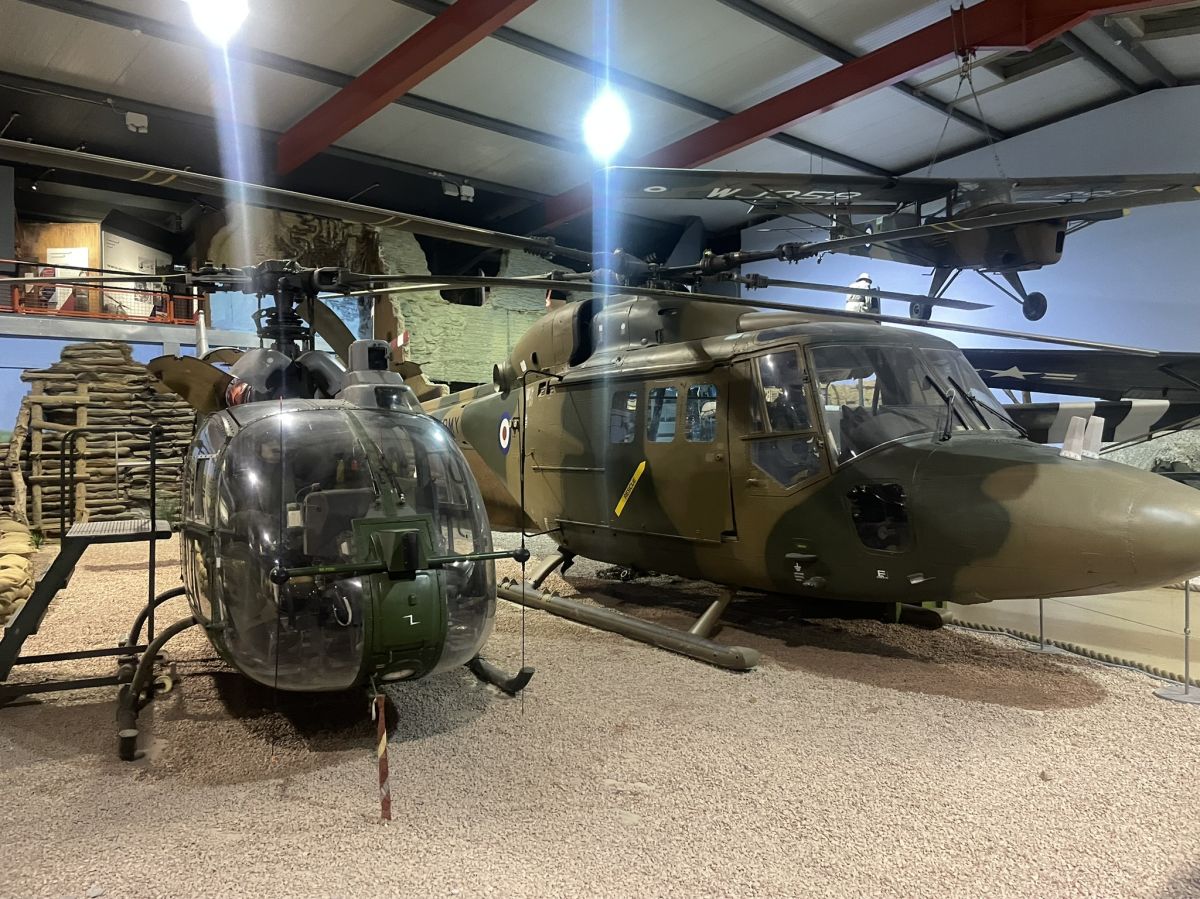
Anyways, with Frome being the nearest habitable town we could all find somehwere to stay in, and a trip on Friday which took in the Army Air Corps museum at Middle Wallop, Devizes was the destination on a traditional damp July Saturday morning heading East.
Having fairly recently painted up a load of 3D printed camels, I had decided that thus event was as good an opportunity as it comes to get them on table as the core element of a Christian Nubian army - but in the process creating the very real challenge of how to make such an army actually interesting to play, and to play against.
The Christian Nubian Army list always seems to appear on table top in the form of three commands. One has six camels The second has six camels and the third has all the impetuous infantry. This is a bit dull and always seems to be relatively straightforward to play against.
My theory was to try something more complicated and have a mix of troop types in some of the commands making the army more flexible even despite its very low command rating of just 2.
My army was made up of the following three commands:
Effectively this was three tiny commands which could work together in various combinations - if there was no target for the medium foot I could leave them behind and use the bowmen and the heavy cavalry to move up (ideally through terrain) and create quite a problem for any enemy mounted.
Against enemy foot the medium swordsman were the obvious choice to take the lead, but also the heavy cavalry gave them a little extra capability - especially if the opponent was medium foot also - and the bowmen coull also be dragged behind and tasked with generating overlaps or filling gaps once the swordsmen were committed.
Having two Impact Light Horse, rather than just the one which I had seen in some other lists, I hoped would generally give the Beja enough Light Horse offensive capability to bully and intimidate anybody else's "textbook 2 light horse with bow" out of the way on a wing, which when combined with four camels generated a strong strike force to push forward on either wing, as long as the command was reliable of course
The first round game would see the newly-minted 3D printed camelry taking on the Rolls Royce of Eastern armies, the Ghaznavids.
The Ghaznavid army excels through its combination of elite heavy cavalry, including powerful Ghulams, who provide fast, hard‑hitting shock capability and can dominate open terrain when properly supported.
Its Indian‑influenced infantry options, especially the fierce swordsmen, give the Ghaznavids strong close‑combat punch, allowing them to hold or break enemy foot formations with determined aggression.
The army’s elephants form a formidable centre, capable of disrupting enemy cavalry, anchoring the line, and creating psychological pressure that forces opponents to adapt their deployment.
Ghaznavid light troops and bowmen offer flexible skirmishing and screening, helping shape the battlefield, protect flanks, and soften enemy formations before decisive charges.
Overall, the Ghaznavids thrive on a blend of elite cavalry shock, elephant‑driven disruption, and aggressive infantry, making them a versatile and dangerous force in both attack and defence.
The lists for the Christian Nubian and Ghaznavid from this game, as well as all the other lists from the games at Devizes can be seen here in the ADLG Wiki.
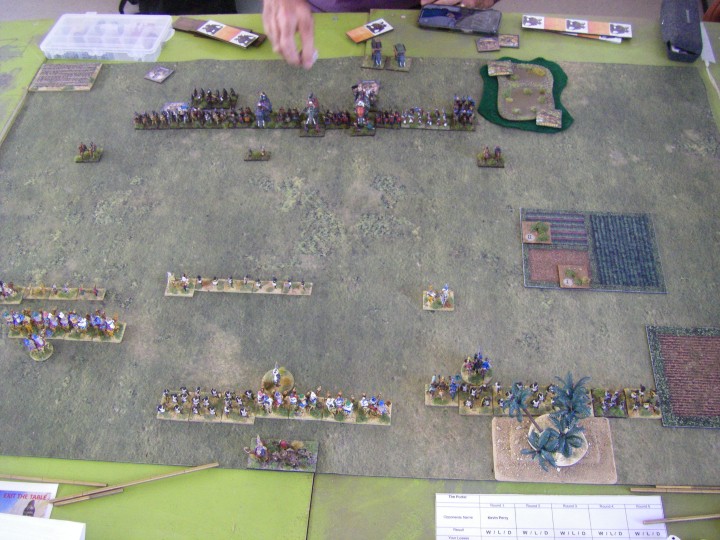
The two hosts unfurled themselves across the plain like opposing storms gathering strength. On my left, the camel corps stood tall and restless upon the open ground, their silhouettes wavering in the heat-haze like ships on a desert sea.
In the centre, Nubian spearmen and camel riders formed a dense, sun‑baked phalanx, shields glinting, banners trembling in the rising wind.
To the right, the all‑infantry command pressed toward the broken terrain, eager to claim the rocks and scrub as their own.
Across the field, the Ghaznavids arrayed themselves with grim splendour: elephants towering in the centre like living fortresses, their armour clattering, while cavalry wings unfurled on either side, sleek and disciplined, as inevitable as the sunrise.
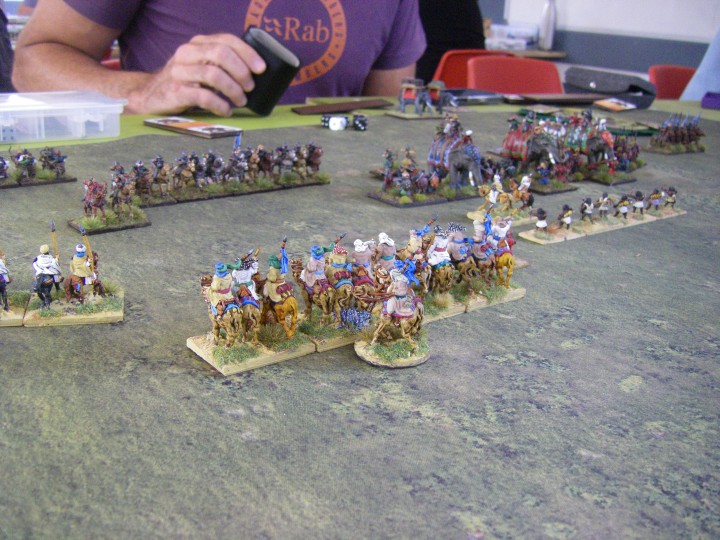
On the left, my camel riders surged forward with a roar of hooves and guttural cries, the beasts lurching into a ground‑eating stride that sent dust spiralling skyward.
They thundered toward the Ghaznavid cavalry, eager to break the enemy’s proud horsemen with sheer momentum and desert ferocity.
In the centre, Nubian skirmishers stepped lightly ahead of the main line, loosing arrows and javelins as they advanced toward the looming elephant corps as their missiles flickered like sparks against the vast grey hides, testing the resolve of the monstrous beasts that guarded the Ghaznavid heart.
Christian Nubian Kingdoms in Africa
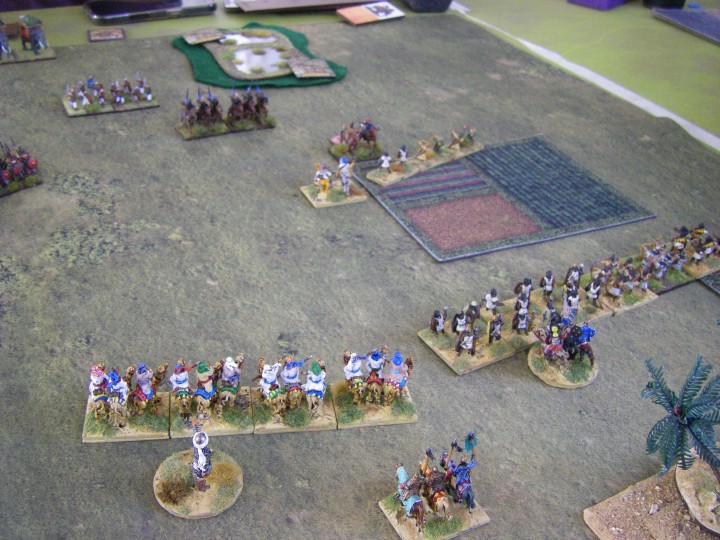
On the right, a ripple of opportunity passed through my troops like a whispered blessing.
The camel riders and infantry there saw the Ghaznavid flank held only by a thin, fragile screen of cavalry — a mere sliver of defence against the desert tide.
With renewed vigour they pressed forward, eager to crush this exposed wing beneath a combined weight of hooves, blades, and righteous momentum. The sand trembled as they advanced, sensing the moment when a battle’s fate begins to tilt.
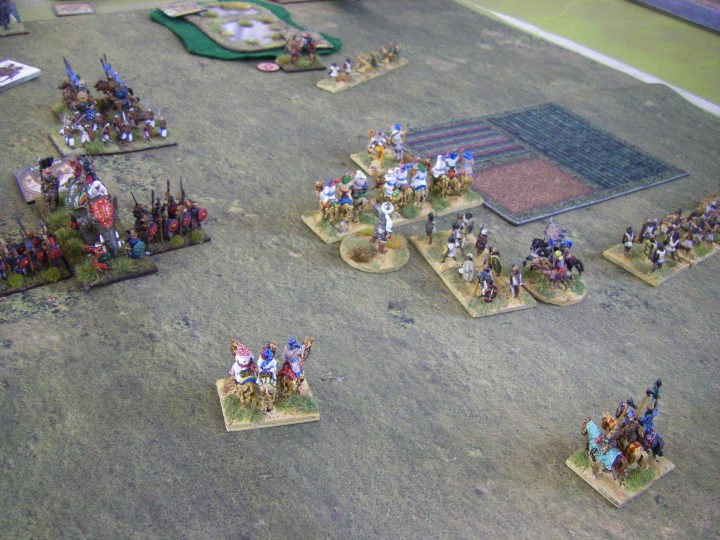
The Ghaznavid horsemen, startled by the ferocity of the assault, wheeled away in a hurried retreat, their formation unraveling like cloth in a storm.
Yet in fleeing, they carved open a widening gap — a wound in the enemy line.
Into this breach surged my Nubian camels and infantry, pouring through with triumphant cries, eager to exploit the weakness and roll up the Ghaznavid flank before the enemy could recover.
The desert itself seemed to pull them forward, urging them into the heart of the unfolding chaos.
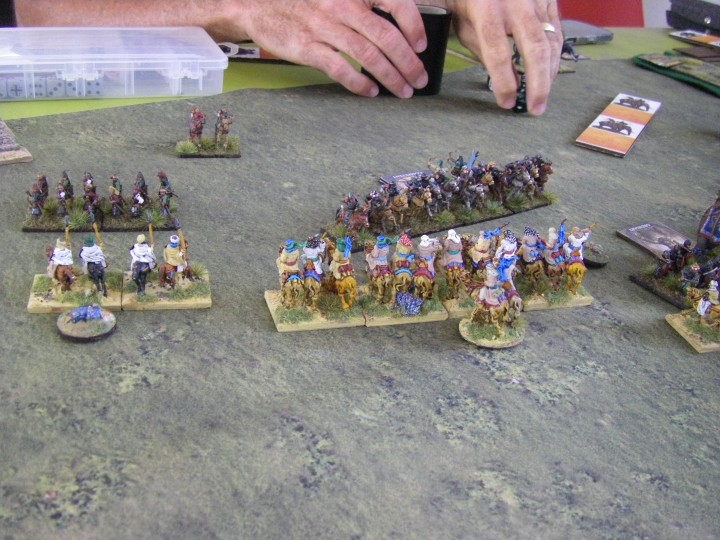
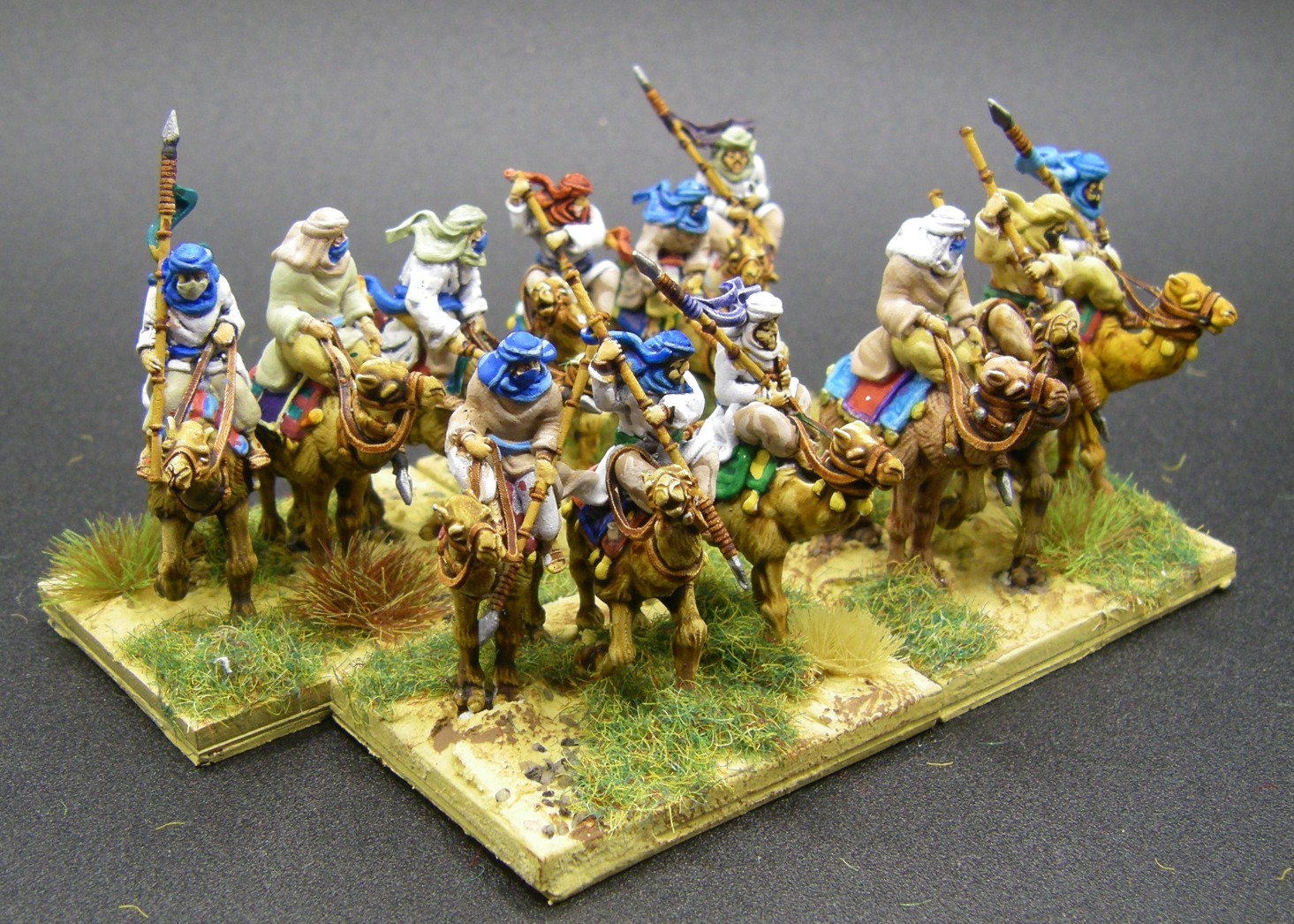 On the far left, the Beja camel riders — fierce allies hardened by wind and sun — swept past the Ghaznavid centre like a sandstorm slipping around a mountain.
They now faced enemy cavalry head‑on, their camels snarling and stamping as arrows clattered against hide and shield.
Behind them, the Beja light lancers endured a rain of archery fire with stoic resolve, lowering their spears and preparing to hurl themselves at the enemy bowmen.
Their eyes burned with the promise of vengeance, ready to ride down the archers who dared challenge the warriors of the eastern desert.
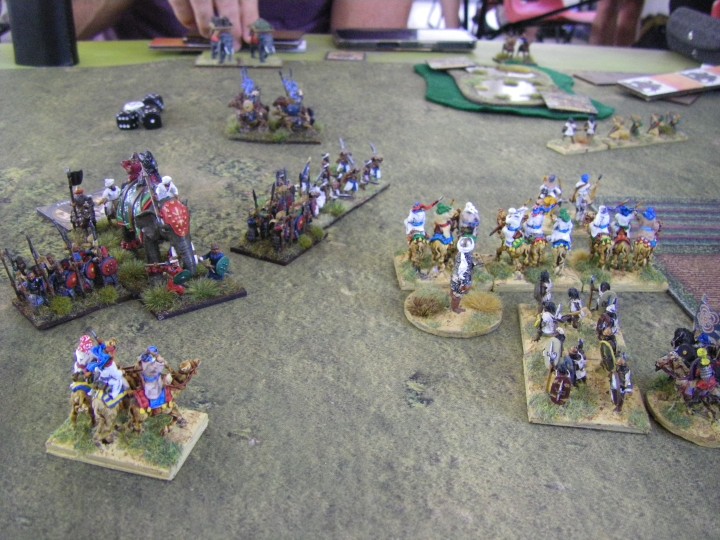
The Ghaznavid centre began to buckle, pulled apart by the relentless tide of camels sweeping down their left flank.
Officers shouted, elephants bellowed, and infantry scrambled to hold cohesion, but the pressure was too great. Units became separated from the protective shadow of the elephants, drifting into exposed pockets where Nubian warrior foot surged forward with grim delight.
These isolated Ghaznavid infantry became ripe targets — scattered clusters of men suddenly alone in a battlefield that no longer belonged to them.
Nubian History
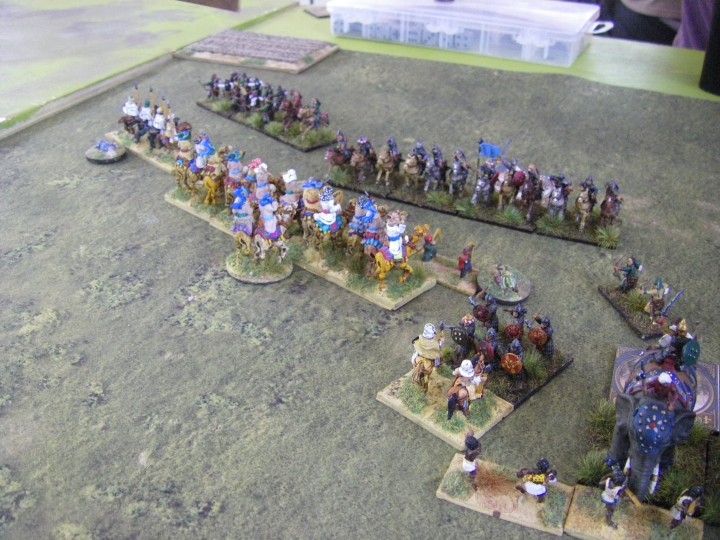
On the left, the Ghaznavid cavalry found themselves trapped between advancing Beja camels and the unforgiving terrain (OK - the edge of the table.. which is pretty dammed unforgiving tbh) behind them.
Their retreat faltered as the Beja pressed on relentlessly, their camel riders shielded by nimble light infantry who darted ahead to intercept incoming arrows.
Step by step, the Ghaznavid horsemen were squeezed into a narrowing corridor of desperation, their options dwindling as the desert warriors closed in with implacable determination.
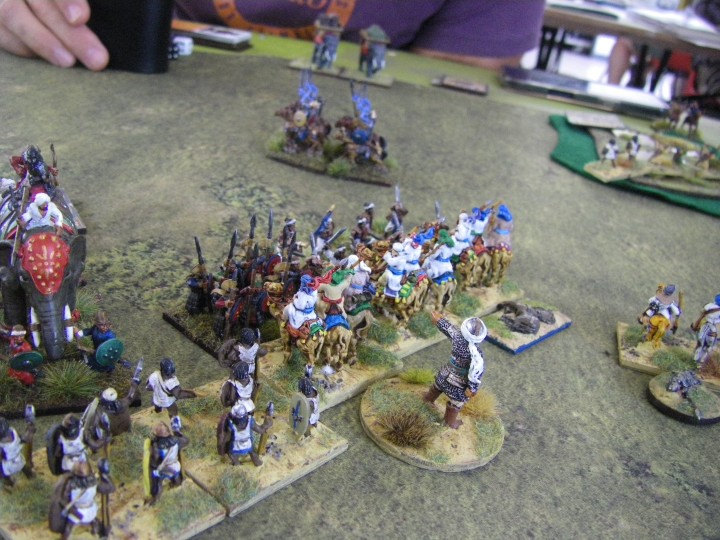
On the right, the assault crashed forward like a breaking wave as Camels hurled themselves at the Ghaznavid open‑order infantry, scattering them with sheer mass and fury.
Behind this tumult, Nubian warriors tightened their grips on spear and shield, preparing to confront the towering elephants that loomed ahead.
Their chants rose in rhythmic cadence, echoing across the battlefield as they steeled themselves to face beasts that seemed carved from myth and nightmare.
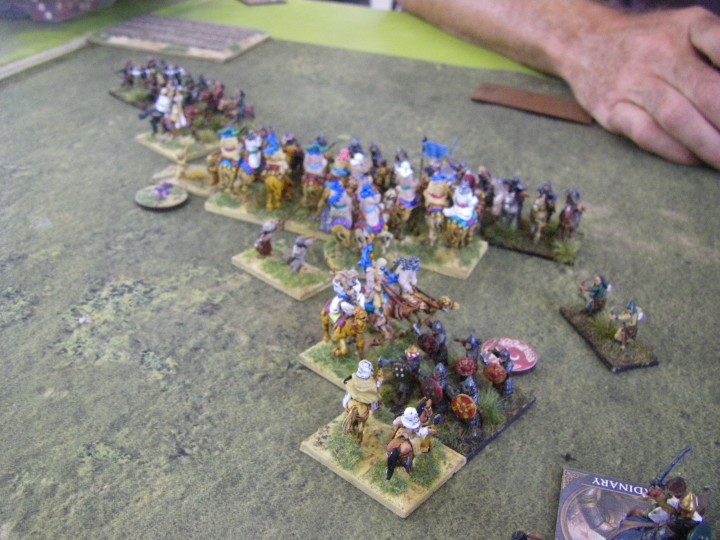
On the opposite flank, the Beja were fully committed, their camel riders locked in fierce combat with the Ghaznavid cavalry. Dust and sweat mingled in the air as blades flashed and camels bellowed.
With disciplined ferocity, the Beja began to wheel inward, turning the enemy centre and threatening to envelop the proud Dailami infantry.
The Ghaznavid line bent under the pressure, its once‑solid formation now fraying as desert warriors closed in from unexpected angles.

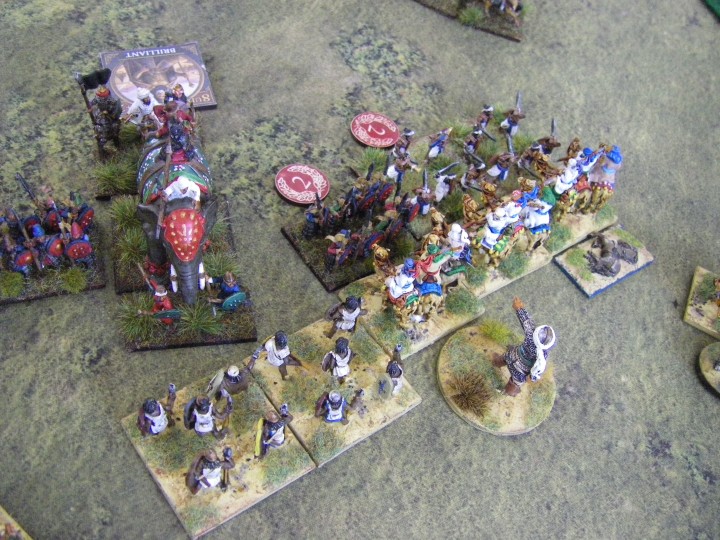
On the right, the Ghaznavid troops began to wilt, their resolve draining away beneath the relentless hammering of Nubian camels.
The beasts crashed through their ranks with unstoppable momentum, scattering men like reeds before a flood.
From a distant rise, the Ghaznavid general watched in growing bewilderment, his mind struggling to grasp how his disciplined army had become beset by so many simultaneous threats — each one blooming like a new disaster across the field.
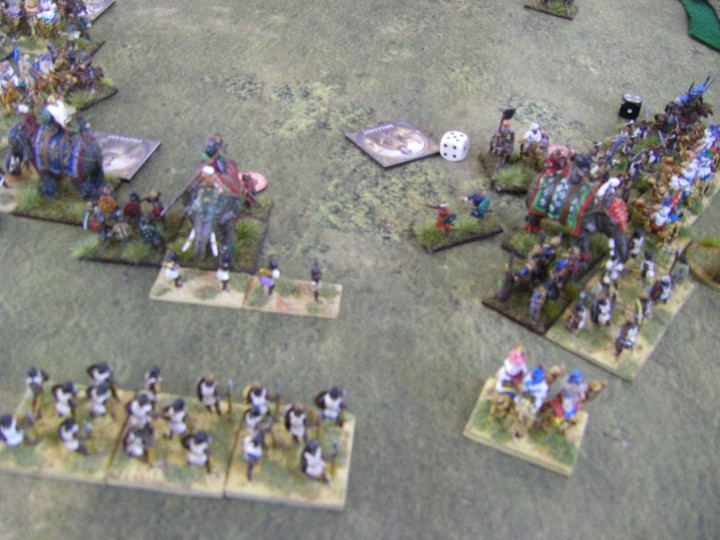
The Ghaznavid centre had now shattered into fragments, each piece desperately trying to fend off camels sweeping around both flanks.
Confusion reigned as officers shouted conflicting orders and units drifted apart like broken pottery.
The elephants, once the proud anchors of the Ghaznavid line, now stood increasingly isolated, their infantry support scattered.
Seeing this, the Nubian foot soldiers exchanged eager glances — the mighty beasts no longer seemed invincible, but vulnerable prey awaiting the final strike.
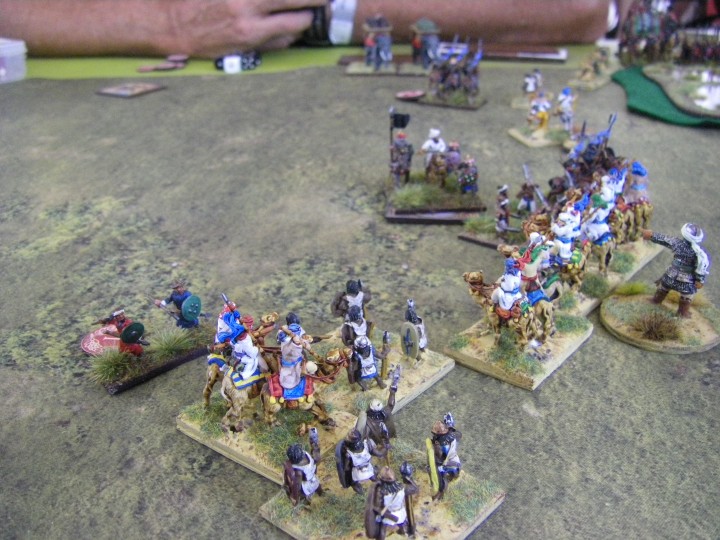
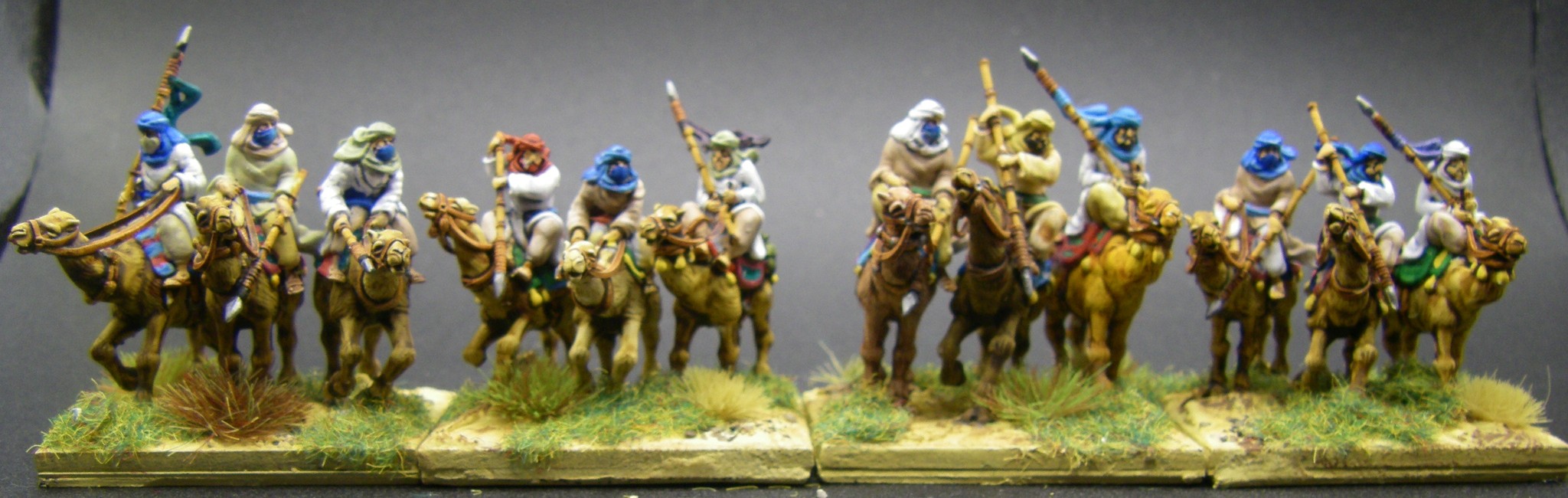 The Ghaznavid left flank collapsed entirely, swept away in a storm of Nubian infantry assaults and thunderous camel charges.
Shields splintered, horses screamed, and banners fell as the desert warriors surged forward with unstoppable momentum.
In moments, what had been a proud wing of the Ghaznavid host dissolved into fleeing remnants, swallowed by the fury of Nubian steel and camel‑borne might.
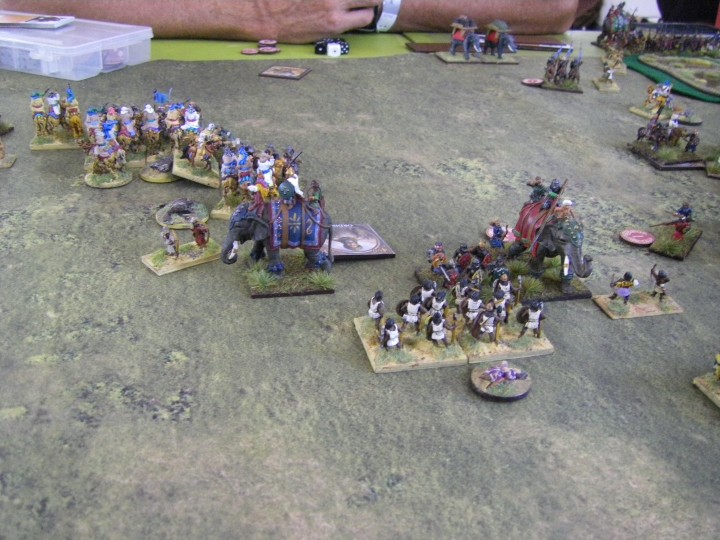
On the right, the Ghaznavid cavalry fought with admirable tenacity, their discipline and courage allowing them to hold against the Beja camel riders longer than expected.
Yet even their valour could not mask the grim truth: the tide of battle was turning against them.
Only the elephants — those towering engines of war — offered any hope of reversing the disaster.
Unless they could perform some miracle, the Ghaznavid right would soon join the left in ruin.
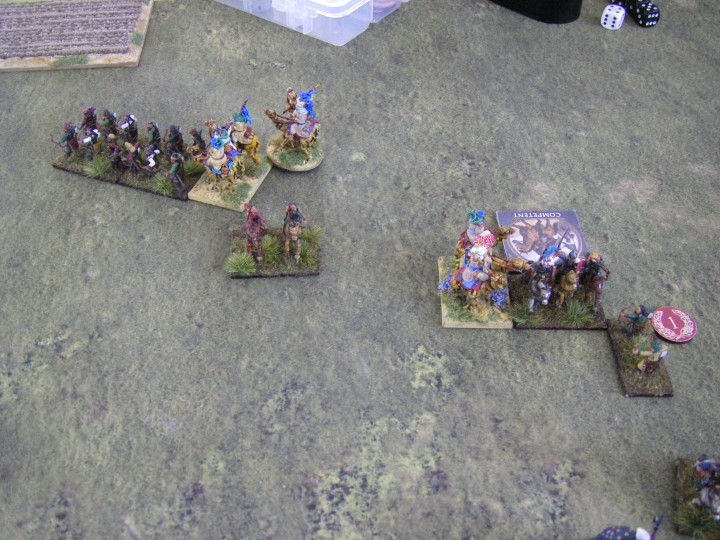
The elite Ghaznavid Ghulams, once the pride of their cavalry arm, now lay scattered across the field, victims of the relentless Beja Camel Corps.
With the Ghulams broken, the surviving Beja riders wheeled inward, sweeping into the exposed flanks of the enemy bowmen.
Their charge carried them even further, crashing toward the Ghaznavid general’s own bodyguard.
The air filled with shouts of alarm as the Beja threatened the very heart of the Ghaznavid command.
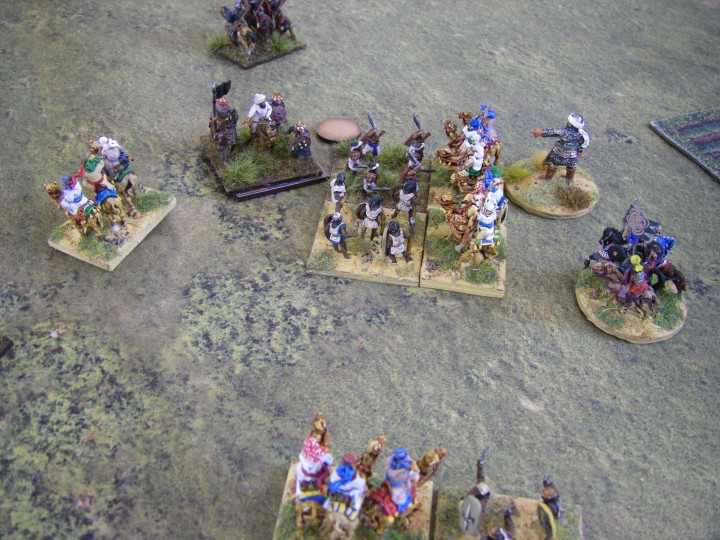
At last, only the fanatical Indian swordsmen remained, their blades flashing with desperate brilliance as they fought to uphold the honour of the Ghaznavid host.
They stood firm against the encroaching tide, roaring defiance as the desert warriors closed in from every direction.

Yet even their fierce devotion could not halt the inevitable. Outnumbered and surrounded by Nubian foot and camel riders alike, they were swept away in the final surge, leaving the battlefield to the victors of the desert.
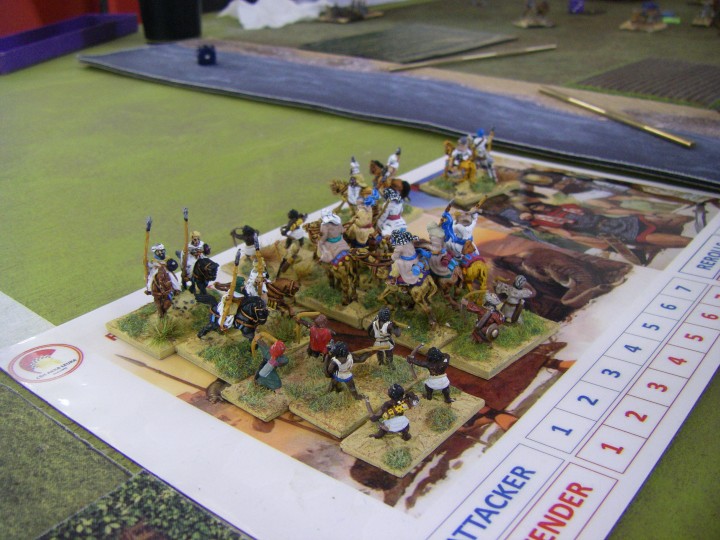
The battle was won, and the casualties for the Christian Nubian empire were surprisingly, pleasingly light as well.
Click here for the report of the next game in this competition, or read on for the post match summaries from the Generals involved, as well as another episode of legendary expert analysis from Hannibal
Post Match Summary from the Christian Nubian Commander
 Warriors of Makuria! Beja allies! Camels who somehow survived despite your terrible sense of balance — gather round and listen to the words of your glorious, divinely‑guided, tactically‑unmatched commander.
Today, we achieved a victory so magnificent that even the angels paused their harp practice to watch. I am told Saint Moses the Black personally leaned over a cloud and said, “Well, that’s impressive.”
The Ghaznavids came with elephants, cavalry, archers, and enough noise to wake Saint Anthony of the Desert from his eternal nap — and yet, behold! They crumbled before us like stale bread dipped in the Nile.
And yes, let us be honest: the tactics were brilliant. Who placed the camels on the flank? Who recruited the Beja, those delightful maniacs who treat enemy cavalry like a breakfast snack? Who spotted the Ghaznavid weaknesses before their general even finished tightening his turban?
It was I — though naturally, Jesus helped a little. A very small amount. Barely worth mentioning, really.
When our camels surged forward, Saint Samuel the Confessor whispered, “Try not to fall off this time.”
When our infantry advanced, Saint Cyprian of Carthage gave them courage, mostly by reminding them that the alternative was being trampled by elephants.
When the Beja lancers charged through arrow‑fire, Saint Moses the Black shouted from heaven, “Duck, you fools!”
And when the Ghaznavid elephants trembled, it was the Archangel Michael — patron of warriors, smiter of demons, and apparently terrified of camels — who glared down and made them reconsider their life choices.
Look around you! The battlefield is littered with Ghaznavid equipment, Ghaznavid pride, and several Ghaznavid soldiers who are still running and may not stop until they reach India.
Their cavalry shattered, their Ghulams flattened, their bowmen scattered like pigeons fleeing a cathedral bell — all thanks to our spears, our camels, and my tactical brilliance, which I humbly compare to Solomon, except better.
Let the Ghaznavid general spend the rest of his life writing sad letters explaining how his army was defeated by camels, saints, and one very handsome Nubian commander.
As for us, we shall feast tonight! We shall praise Christ with voices so loud that Saint Augustine of Hippo will complain about the noise from across the Mediterranean.
We shall honour the saints who marched beside us — especially the ones who specialise in camel‑related miracles, of whom there are surprisingly many.
And we shall remember that Nubia stands strong not only because of our courage, our faith, and our camels, but because the Lord of Hosts clearly enjoys watching us win battles in spectacular fashion.
Raise your voices, children of the desert! Lift your spears, children of the Nile! For Christ has triumphed, Nubia has triumphed, and — let us be honest — I have triumphed most of all.
Hannibal's Post Match Analysis
 Hear me, ye assembled rabble of spear‑fondlers and bow‑polishers, for I, Hannibal the Nasty — scourge of Rome, delight of Carthage, and inventor of at least three kinds of insult — do now address the lamentable spectacle that was thy so‑called “Christian Nubian command.” Verily, I have seen goats with more tactical wit, and goats are famously stupid, especially the ones who worship strange new gods from the future.
O thou Nubian commander, thou art a pudding‑brained moon‑calf, a sanctimonious sand‑sniffer, a holy‑book‑hugging halfwit who thinks the battlefield is a church picnic. What madness possessed thee to leave half thy infantry standing idle like bored temple statues? Thy bowmen loitered behind the lines as if waiting for divine permission to shoot — yea, as if thy peculiar sky‑god must first sign a papyrus saying, “Let fly, my children.” In Carthage we need no permission; our gods encourage smiting as a daily warm‑up.
And lo, thy camels — those noble, flatulent ships of the desert — were hurled against resilient spearmen as though thou wert trying to prove a philosophical point about futility. What fool’s gospel didst thou follow? “Blessed are the camel‑chargers, for they shall inherit the pointy end”? By Tanit’s left sandal, I have seen children throw fruit at walls with more strategic foresight.
Thou didst rely, O Nubian nincompoop, on a single matchup — one camel against one Ghulam — as if the entire battle were a tavern wager. “Behold,” thou criedst, “my camel shall out‑punch thy armoured horseman!” Aye, and by some miracle of luck, sweat, and camel‑breath, thou didst win that duel. But strategy built upon one beast’s good mood is no strategy at all. It is gambling, and bad gambling at that, fit only for drunken Phoenicians and priests who have misplaced their gods.
Thy Christian faith — this newfangled superstition from centuries hence — didst thou invoke as if it were a tactical manual. “Christ shall guide my hand,” thou proclaimed. Yet Christ, poor fellow, hath not even been invented in my time. How then could he guide thee? Thou might as well pray to a goat, or to a misplaced sandal, or to the ghost of a future bishop who hath not yet been born. Truly, thy religion is so premature it squeaks when thou mention it.
Know this, thou Nubian commander of dubious competence: hadst thou worshipped proper gods — mighty Baal, cunning Melqart, or even the lesser deity of Mildly Annoying Winds — thou might have received better counsel. Instead, thou didst stand upon the field like a sanctified turnip, wasting infantry, ignoring bowmen, and trusting camels to solve problems better suited to brains.
Thus I, Hannibal the Nasty, pronounce thee: Commander of the Unused, Patron Saint of Poor Deployment, Archbishop of Camel‑Based Folly, and Grand High Priest of Tactical Misadventure. May thy future battles be less stupid, thy camels less overworked, and thy gods — whatever century they come from — more helpful than they were today, and let us pray to our own gods that you manage to sort at least some of this out before the next game!
Click here for the report of the next game in this competition
You may also like....
Game 1 Christian Nubian vs Ghaznavid
Game 2 Christian Nubian vs Berber
Game 3 Christian Nubian vs Tuareg