

Biblical Era Warfare at Attack! 2025

Assyrians vs Classical Indian
Game 1 Assyrian vs Classical Indian
Game 3 Assyrian vs Later Assyrian Empire & Sargonid
Attack! in Devizes, home of hard-to-find accommodation, large genitals carved into chalk hillsides*, butter-based condiments and fine local ales was the venue for unleashing yet another iteration of the Newline Designs 28mm Assyrian army that has been seen on multiple occasions on this very website already.
(* Yes, I know that's in Dorset, and the one near Devizes is a horse that was carved in the 18th Century, but frankly if you are looking for historical accuracy you're very much on the wrong web page here anyway)
 This time however the Assyrians were playing as "Early" (or maybe "Middle?") Assyrians, the slightly pre-Sargonid version of the army in a theme which forced larger numbers of chariots into each army list than might normally have been expected.
In my case that did entail actually buying some more - another Newline purchase, this time of 3 Hittite chariots each with 2 horses, and some Assyrian archers to replace the Hittite fighting crewmen so the chariots could pretend to be Assyrians, allowing my list to comply with the specific restrictions of the theme at Attack!

There's a load more info on the chariots on my website you can access here, but as always, the Newline models are great value if a little old school in style.
The Earlier Assyrian army (in ADLG) benefits from having good quality "Impact" infantry, great for attacking enemy foot troops, and neutralizing any Impetuous warband as well. The flip side is that in the earlier period the Assyrians have not yet mastered the art of horse riding, and so the cavalry in the army are not yet the "Persian" quality Elite Mounted Heavy Cavalry Archers, but are just bog-standard Medium cavalry Bowmen - aka arrow magnets.
That means the army has to rely much more on an infantry assault, with what are quite expensive (in points cost) strike soldiers at the expense of greater vulnerability to enemy chariots.
In this specific theme the minimum number of chariots was boosted, meaning that fewer of the points total for the army can be devoted to the strike infantry - another challenge to face when compiling the list.
The first matchup in the competition would see these newly-reclassified Assyrians taking on the Gupta Indians of West Country Carpet Legend Donesh Mukhu.
The theme at Attack! this year specifically disallowed Elephants, meaning this Indian list would need to use its Heavy Chariots, and also to reclassify any compulsory elephants as Ramathusala - war wagons which can (unusually) be pushed into contact with the enemy. Being Indian, the rest of the army would then be hordes of archers and mixed swordsmen/archer units, plus a scattering of crappy cavalry.
The textbook way to play against an Indian army is to attack quickly on one flank, on the assumption that its poor command and control, and slow moving infantry-rich composition will mean the unengaged wing will struggle to get into the game.
Attacking on a narrow frontage also softens the power of massed shooting - which can be painful if you try and take on the entire army at the same time.
The lists for the Assyrian and Classical Indian from this game, as well as all the other lists from the games at Attack can be seen here in the L'Art de la Guerre Wiki.
Playing the forces of Donesh "The Sanjay of Underlay" Mukhu is always a lavish experience — a riot of colours, fringes and fringed collars, with a heavy pile of overconfidence beneath it all.
The Global Mukhu Carpet Retailing Empire - Essex Branch
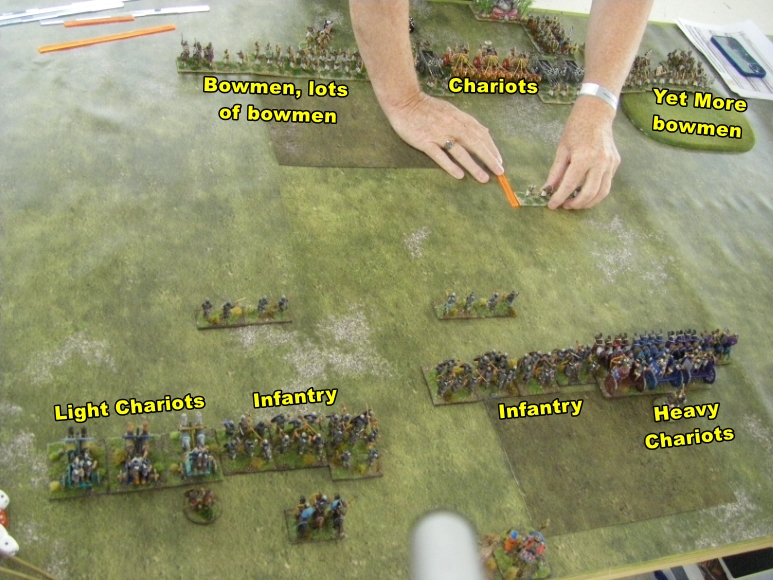
As is customary when facing a Classical Indian army, it turns out that the Guptan carpet-fanciers are not quite numerous enough to drape the entire battlefield in dhoti-wearing martial splendour, meaning that an Indian army will almost inevitably end up tucking themselves snugly up against a terrain piece or table edge. This time around it is their left flank that squeezes up to the table edge as best it can, like a shagpile runner pressing itself somewhat salaciously against a willing but gloss-enamelled skirting board,
This kind of always-too-short deployment in turn usually manages to leave several acres of open space on the opposite flank (here the right), and these expansive stretches of almost carpet-like terrain are what my Assyrian chariots fully intend to joyfully sashay across - presuming they can survive a gentle carpet bombing of arrows on the way in!
On the Indian right I looked to refuse the Indian flank entirely by use of a frankly pathetic doormat of a command — just a few sorry cavalry — which is hastily unrolled and then swiftly rolled back again, abandoning this flank entirely. Left behind like last year’s budget underlay, a great many Indian archers now flap haplessly in the breeze, unsupported and unsure if they're in a battle or awaiting the arrival of The Don to conduct the ceremonial opening of a carpet-based trade fair in far off Jaipur.
The Gupta Military
The army of the Gupta Empire, which flourished in India from roughly the 4th to 6th centuries CE, was a formidable and diverse force, blending indigenous martial traditions with a touch of the eccentric—especially after the arrival of the deeply influential and apocryphal figure of Donesh Mukhu.
Donesh, a seasoned DESI world traveller with an ancestry hailing back both to the carpet weavers of Jaipur and a chance meeting between two young sweethearts in the back seat of a Ford Mondeo parked up in the Gordano Services car park on the slightly less glamorous edge of Bristol, somehow found himself in the heart of classical India and, drawing on his decades of experience selling mid-range shag pile and hand-tufted specials, became an unlikely but inescapable military advisor to the Guptas.
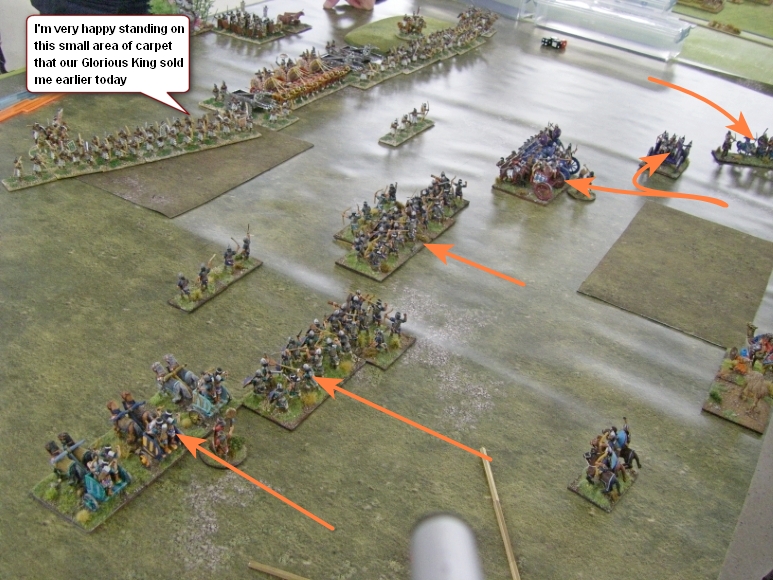
In the centre, the ponderous, thick-threaded four horse Indian chariots await. Vast and bejeweled, they sit in aloof majesty, tasselled horses pawing the dirt, aching to charge yet somehow content to lounge like display models in a Mukhuh carpeting emporium somewhere in a shabby yet also chic industrial unit on the Mumbai ring road
Meanwhile, the Assyrians rattle forward — light chariots zipping about like moths in a warehouse seeking low thread count Axminster to tease apart, teamed up with lean, aggressive Assyrian assault infantry moving with unnerving purpose along the Indian left in a concerted effort to to outflank and assault the poorly cut hem of the Guptan line.
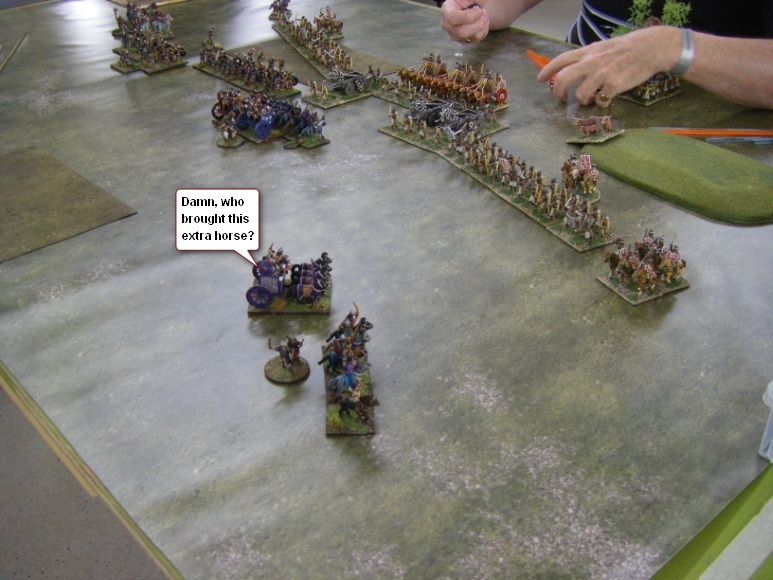
The Assyrian's sacrificial mini-command on the Indian right is now backpedalling like a carpet-seller avoiding refund claims, as a single Assyrian heavy chariot thunders in their direction, its wheels scything through dust and logic alike.
Even one of these ironclad juggernauts is enough to send the Indian archers — used to soft landings and silk threads — into a hesitant, nervous waddle.

On the Assyrian left, their elite Guard Infantry — trained to advance through storms of arrows as if they were mere stray threads — march inexorably forward.
Brave Assyrian slingers and scrappy skirmishers provide a protective fringe, absorbing the sharp edges of Indian archery to allow their heavier comrades to close in.
The Gupta Military
Traditionally, the Gupta military was composed of four primary components, in accordance with the ancient Indian doctrine of chaturanga: infantry, cavalry, elephants, and chariots.
The infantry formed the backbone of the army, armed with bows, spears, and swords, while the cavalry—often clad in mail and wielding lances—delivered fast-moving shock attacks.
Elephants were used as mobile fortresses, terrifying the enemy with their sheer size and the thunder of their charge, while chariots, though declining in prominence by this time, still retained ceremonial and symbolic value
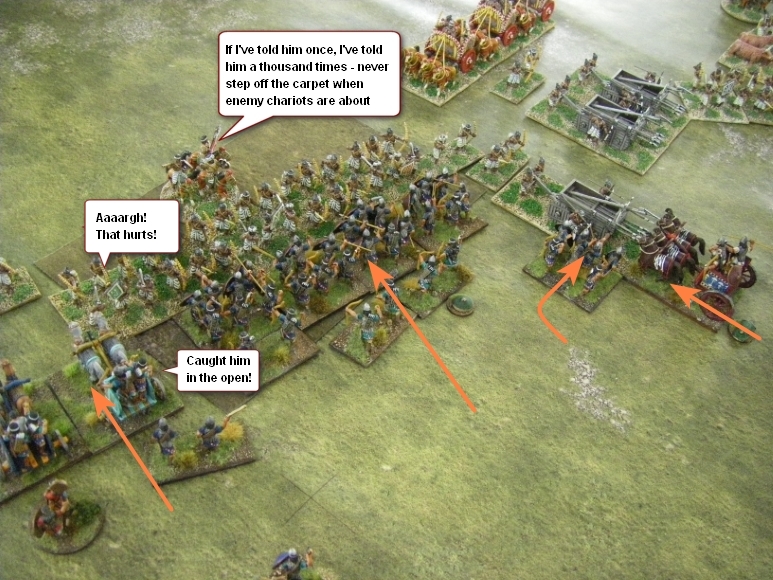
 The clash is sudden. Assyrian infantry barrel into the Indian archers like a poorly secured area rug meeting a Dyson.
Light chariots swoop in from the left, catching those Indian bowmen who have unthinkingly stepped out of their safe, undulating, chariot-repelling terrain.
In the centre, an Assyrian heavy chariot smashes into a Ramathusala war wagon — essentially a weaponised carpet showroom on wheels, bristling with spears, banners, and bronze tassels.
It’s not an ideal match-up, but the Assyrians are running out of targets, and curiosity kills more than just cats.
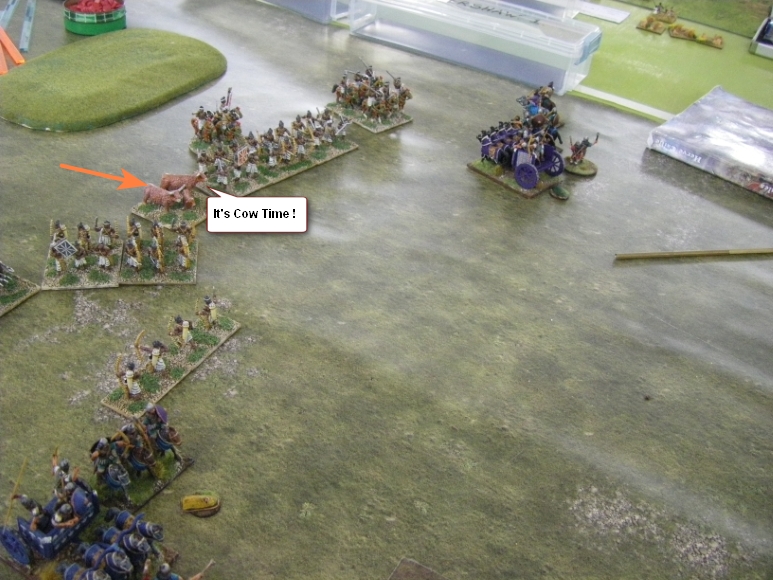
Back on the Indian right, the lonely Assyrian chariot continues to threaten scattered bowmen and cavalry, despite looking like a door mat dragged halfway through a threshing floor.
There's barely an Assyrian soul left on this flank — only a few foot-weary Indian pedestrians now attempting to hike their way toward the action like bargain hunters arriving late to a warehouse clearance event.
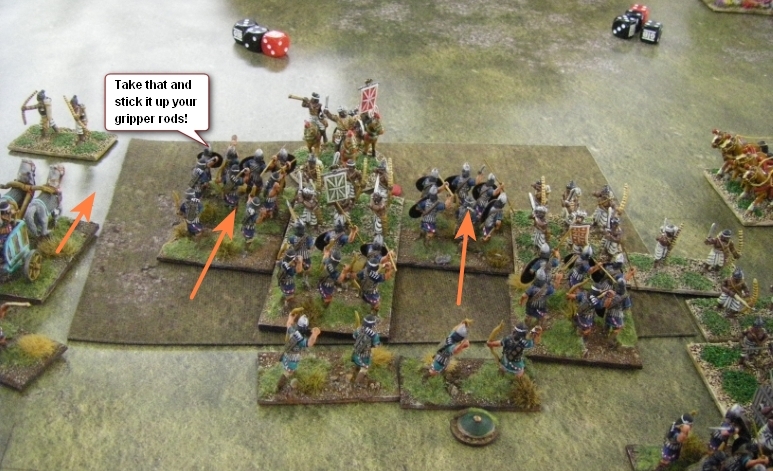
The Assyrian Guard Infantry — unstoppable, unflappable, and clad in linoleum-patterned lamellar — obliterate the Indian left.
The violent and swift assault ejects the Indian mostly-shooters from the small carpet sample masquerading as a field in double quick time, and reminds the watching Indian military high command that they cannot just ignore the fact that the combat ability of Mixed Sword/Bowmen is Mediocre, which when set against real troops like these Assyrians is essentially just as hapless as plain bowmen, but at a greater points cost per unit.
The remnants of the archers are now being swept up like offcuts after a carpet fitting.

The Gupta Military
But it was Donesh Mukhu's unique perspective that reshaped Gupta military logistics, camp design, and—controversially—uniform aesthetics.
He famously quipped, while displaying an enormous Persian-style rug repurposed as a banner, "Designing an army is exactly like selling a luxury carpet. It’s all about making a dramatic first impression, concealing the stains of previous defeats, and knowing when to roll something out… or when to beat it soundly in the courtyard."
His flair for presentation revolutionised military parades, leading to battalions marching under coordinated, colour-coded canopies, each bearing the imperial sigil and a generous helping of fringe.
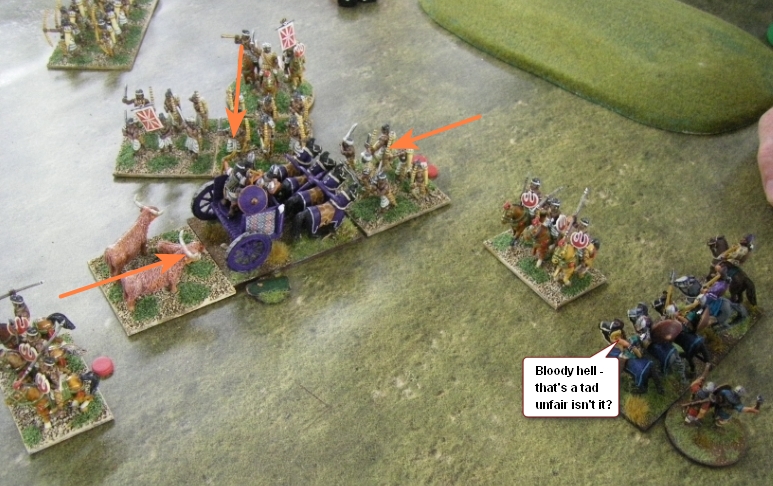
Over on the Indian right, a minor epic unfolds.
Every available Indian unit — spearmen, archers, a wayward cow herd, even Sanjay McHugh's discount clearance bin — is hurled at the Assyrian chariot in a display of desperation and "I'll throw in a set of gripper rods if you can sign on the dotted line this afternoon" discount tactics.
Finally, the juggernaut is felled, possibly tripping over a misplaced swatch of brocade.
The Guptas
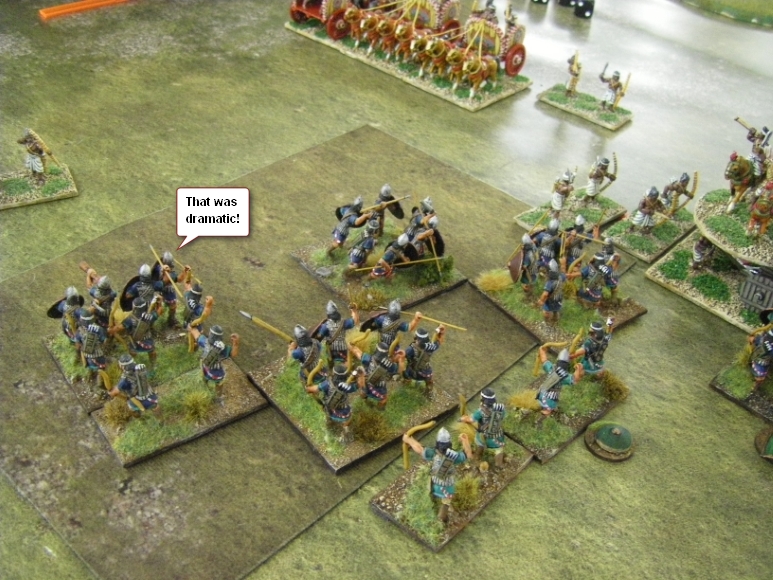
But the centre is far more simple - Assyrian infantry have swiftly removed Indians from the micro carpet field and now they stand in full possession of the battlefield, shattered into multiple fragments standing around where they have finished off the Gupta infantry with some aplomb, their discipline unravelled like a Persian rug in monsoon season.
The Indian Chariots have now reformed, and from a distamce they gaze upon the disjoined Assyrians, wondering if they will be suicidal enough to try and come and get themselves some Chariot on Medium Foot In The Open action ?
The Gupta Military
Mukhu also introduced the radical notion of soft furnishings in the officer's tents, claiming that:
"A battlefield is just like a drawing room. It's all posture, timing, and being absolutely sure your runners don’t curl up at the edges when the enemy steps on them."
His influence was such that the elite corps of the Gupta army —the Rugga Sentries — fought in specially reinforced kilim-weave tunics, said to protect against arrows and red wine stains alike.
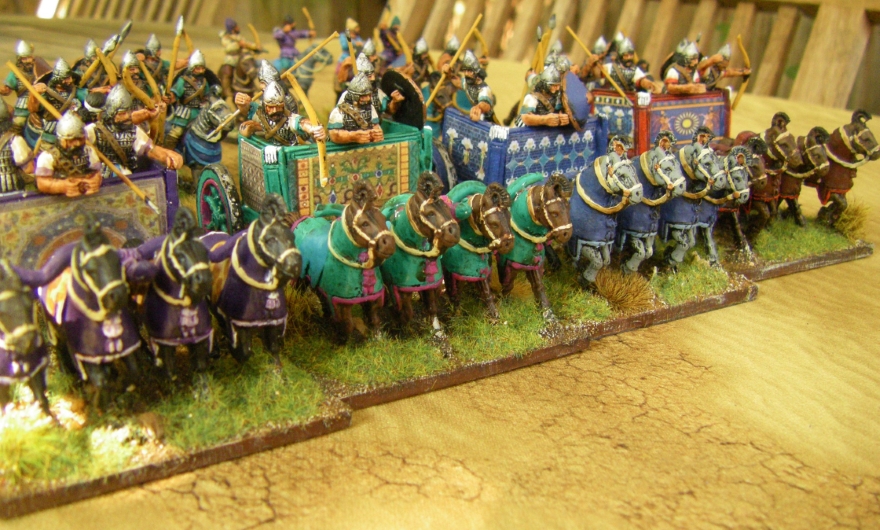
With the archers removed, the Assyrian infantry and Chariots turned their attentions to the Ramathusala in the Indian centre.
Everything was repacked, slammed together, and hurled at the wall of wooden wagons in an attempt to roll through the wheeled battle carts and get through them into the squishy bowmen beyond.
The battlefield has now rotated an elegant 90 degrees — an act of martial feng shui — as the Assyrian Guard Infantry begin climbing the spike-laden flanks of the Ramathusala wagons.
The Indians, now in a defensive formation reminiscent of a cluttered showroom, prepare to receive this second wave of rough-handed visitors.


 Despite their weariness, the Assyrian foot guards attack with grim determination.
But it’s like trying to disassemble a display made entirely from sharpened coat hangers and optimism, as each war wagon takes its toll, each Indian arrow another tangle in the weave of Assyrian progress.
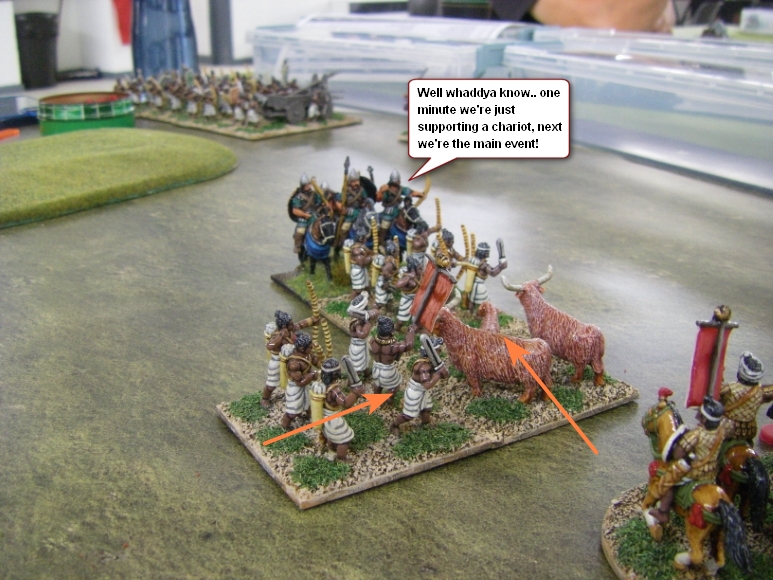
And yet, on the far right, at long last, the mighty Assyrian chariot falls.
The entire Indian flank appears to have taken a swing at it — it’s unclear whether it was an elephant, a war cow, or possibly a surprisingly sharp rug sample that landed the final blow.
But in the aftermath, the Indians are distracted — a swirl of celebration and tangled wheels — allowing Assyrian cavalry to catch yet more of the Indian archers unawares.
The Gupta Military
Among the more fearsome innovations of the Gupta battlefield was the Ramathusāla — a brutish, barrow-like contraption designed to counter the menace of charging cavalry and rogue elephants. These heavy carts were pushed or dragged into position by squads of the bravest (or least popular) infantrymen and bristled with iron spikes, sharpened bamboo shafts, and occasionally decorative tassels—an innovation many attribute directly to Donesh Mukhu. Though originally conceived as a straightforward anti-cavalry device, Mukhu saw in the Ramathusāla an opportunity for flair and function.
"They're just like a rug in a busy hallway," Mukhu once said, brushing dust off a spike with a silken handkerchief, "They stop traffic, soak up the mess, and if you lay them right, no one's getting past without tearing something important." His vision led to the mass production of Ramathusālas with interchangeable fronts—some festooned with tiger motifs, others with exotic pelmets, and one ill-advised prototype adorned with actual working wind chimes. His influence wasn’t limited to style either: Mukhu organised the carts into tactical "runner rugs" formations, deploying them in staggered patterns to break up enemy charges like a well-placed doormat in a stampede.
Though controversial among the more conservative elements of the Gupta court—one minister referred to the Ramathusāla as "a travelling accident in an ironmonger’s"—the contraption proved devastating in key battles.
Indeed, it was said in later years that "nothing could stop a Gupta line with Ramathusāla ahead and Mukhu behind, waving his measuring tape like a standard.
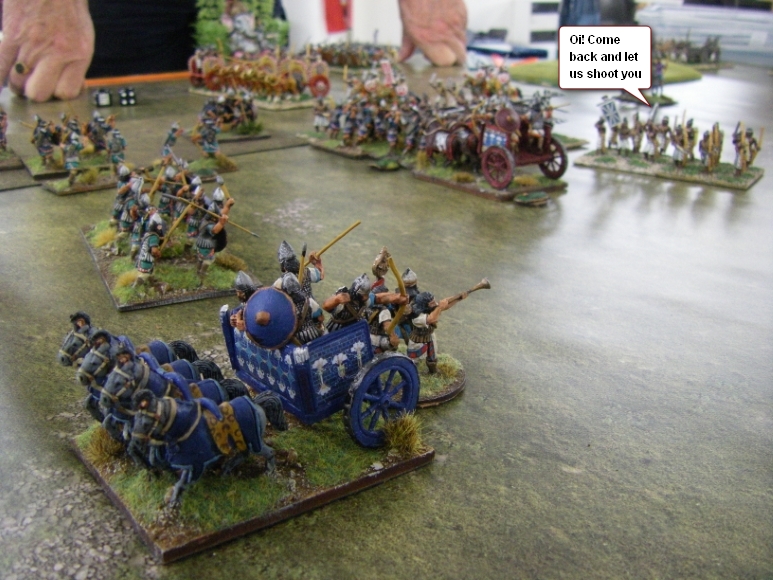
Still, the loss of the chariot allows the Indians to refocus.
The bowmen regroup and open fire again, now targeting the Assyrian centre with renewed gusto.
The surviving Assyrian chariots, already second-guessing their career choices, wheel away rather than face another salvo.
The Gupta Empire
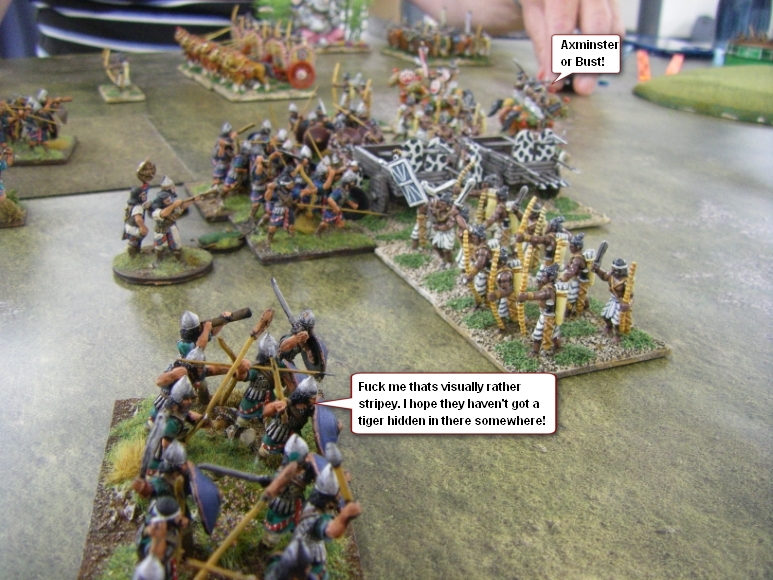
The battlefield is now a bizarre rotated mess — lines skewed, units tangled like a thread-pulled kilim.
The Assyrian Guard Infantry advance again, dragging their exhaustion behind them like frayed carpet edges. They crash once more into a wall of Indian arrows and war wagons, hoping brute force can conquer colourful defiance.

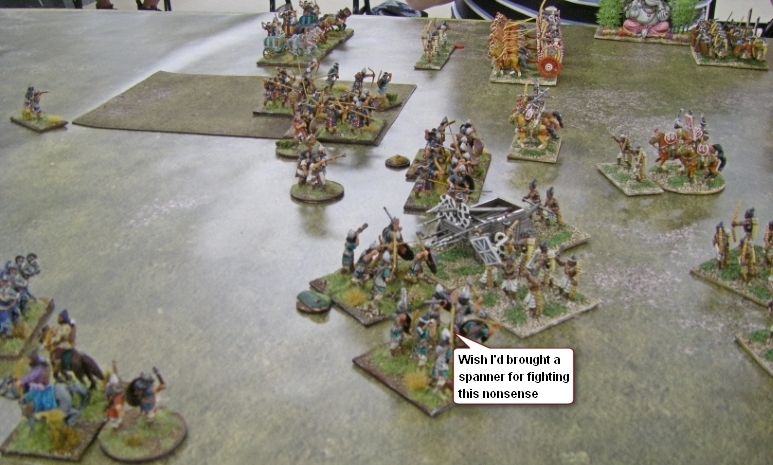
But now even the mighty Assyrians begin to falter.
Their spirits, like overly ambitious pile depth, start to collapse under the weight of continual combat.
The Indians, though tattered and weary, hold.
The Gupta Military
Though historians are understandably sceptical about the veracity of some of these claims, it is undeniable that the Gupta military of this era was unusually well-decorated, both in terms of martial achievement and brocade appliqué.
And whether or not Donesh "The Sanjay of Shagpile" Mukhu truly existed, his catchphrase still echoes through the annals of Indian military history:
"You can tell a lot about a man by how he lays out his mat—on the battlefield, or at a clearance sale in Swindon."
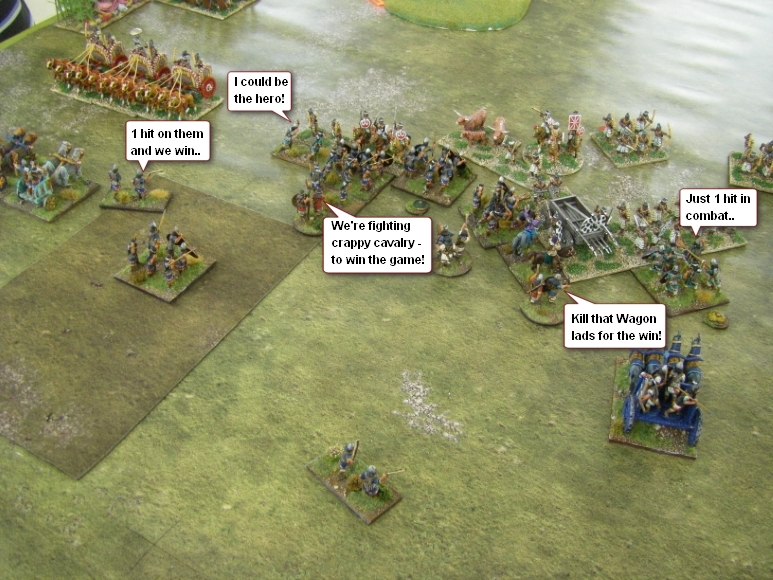
As night falls — or more accurately, as the sands of game time run out — the Assyrians need but a few more telling blows to claim victory. They throw themselves into one last series of charges, swings, and slashes. But fortune deserts them, every strike falling just short — as if blunted by a layer of luxury shag.
Only the Assyrian general remains — a figure of legend, fighting alongside his elite Guard, facing down a single, rather confused Indian horseman. He steps forward, certain that with one last heroic act he will turn the tide.
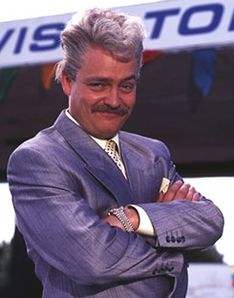
The Global Mukhu Carpet Retailing Empire - Yorkshire Branch

 But then fate intervenes. He stumbles. His men, horrified, falter. And at that instant, the Indian cavalryman — perhaps a minor noble, or perhaps just a particularly vengeful rug merchant — charges. His blade flashes. The Assyrian general falls, with a cry said to echo from Babylon to Basingstoke.
At the sight, the Assyrian army quails. Their morale shatters like a mirror dropped on a marble floor. They rout. They flee. And the battlefield is left to the victorious — if extremely footsore — forces of Donesh "The Sanjay of Underlay" Mukhu.
The carpets may be bloodied, the fringes scorched, but the showroom is, for now, still open as the Assyrians fall to an agonisingly close defeat to the countless hordes of Indians!
Click here for the report of the next game in this competition, or read on for the post match summaries from the Generals involved, as well as another episode of legendary expert analysis from HannibalPost Match Summary from the Assyrian Commander, Elqosh, Gods Arrow
Spoken from atop the blood-slicked stones of the Field of Ragashara, before the assembled survivors of his mighty host
 O ye Lions of Nineveh, ye Hawks of Harran, ye steadfast sons of Sargon!
Lo! Today the heavens weep not for our cause, for the heavens know we fought with the fury of Nergal and the cunning of Enlil! And though the tide of fate was as a Babylonian invoice—unclear, shifting, and crammed with hidden charges—we stood proud in the face of an enemy as numerous as the grains of sand in the Euphrates delta.
Behold! They came not as warriors but as a deluge—an unwashed tide of spear-waggling street vendors led by that well-oiled peddler of poly-woven deception: King Donesh ‘The Sanjay of Underlay’ Mukhu. A man who, after the clash was done and I—noble in defeat—approached to offer the sacred palm of truce, attempted to flog me a moth-eaten Dhurrie runner and a so-called ‘premium’ anti-slip mat made of melted-down goat hooves and camel regrets!
And what of this carpeted con-man’s stratagem, eh? What brilliance did he display? Was it like unto the cunning of Tiglath-Pileser in the marshes of Arzashkun? Nay! He brought only men. And more men. And then, when those men had filled the field like spilled millet, he brought more still! That is not strategy—it is upholstery by avalanche!
Yes, our right wing was refused—not because we lacked courage, but because, like the wise floor-fitter before laying LVT in a damp conservatory, we understood the perils of overextension. I concentrated our strength upon the left, pressed forward with precision like a chalk line snapped tight across a fresh concrete screed. And for a moment—yea, for the blink of Ishtar’s eye—the gods themselves paused to admire our martial geometry.
But alas! Our foes rolled forth their infernal Ramasthusalas—those cursed spike-boxes, half wagon, half lunacy. Their sides like a freshly varnished dado rail, impervious to our might! Our warriors flung themselves against them like blunt Stanley knives upon reinforced laminate, only to be repelled time and again
Still—mark this! The great Indian chariots, those unbridled monsters of painted wood and ambition, they did not so much as touch us! Like a poorly aligned threshold strip, they sat askew, unused, humiliated
O Assyria! O my soldiers of stone and fire! Though the battle slipped from our grasp like a badly measured underlay roll on a steep stairwell, our honour remains intact! For the gods do not count men, they weigh worth, and in that scale, we are giants
So let the scribes write not of defeat but of glorious delay! Let the bards sing not of our flight, but of our flexible tactical withdrawal! Let them all know—Elqosh, God's Arrow, was not beaten. He was merely… momentarily unscrewed.
Now! Fetch me that cursed rug the king sold me—my tent floor is damp and reeks of goat!
Hannibal's Post Match Analysis
 O Elqosh! Grand Peacock of the Puffed-Up Parade! Thou painted patriarch of perished plans, thou oiled and perfumed idol to the gods of Overstatement! Must I yet again endure the wailings of thy pipe-blower heralds, bleating about "noble effort" and "moral victory", even as the vultures sup upon thy army’s scattered bits?
Let us not mince words, O King of Confused Formations and Misjudged Terrain: you lost. Lost, and not in the noble, last-stand-at-Thermopylae sense. No. This was a loss more akin to slipping on a lentil and landing headfirst in your own cooking fire.
Thy opponent? The wily and fragrantly confident Indian King Mukhu. A man of guile, of grace, and of grotesquely effective tradecraft. His army was a colourful armada of archers, war wagons, and those delightful-yet-terrifying four-horse chariots with the steering finesse of a drunk goose on rollerskates. Even their least soldiers — barefoot and half-naked — wielded slings and smirks with lethal efficiency.
And yet thou, Elqosh, rolled into battle with all the subtlety of a dung-cart with square wheels. Thy cavalry surged like an overcooked lentil stew — too fast, too early, and all in the wrong direction. Thy chariots? Splendid, certainly, if one were judging a parade. But alas, the Indians had read the manual. They outflanked, outshot, and out-carpeted you at every turn.
Ah yes — the carpet. We must speak of it. For it was after this battle — a clash you dare describe as "honourably inconclusive" (read: utter defeat) — that I encountered King Mukhu myself, by sheer chance, at a Welcome Break on the M5 just north of Bristol.
There he was — golden scarf, kohl-lined eyes, bedecked in silk robes the colour of fermented mangoes, surrounded by attendants humming in strange harmonic thirds, exhaling what I could only assume was a controlled plume of cinnamon-scented wisdom.
He beckoned me to a small folding table set up between WHSmith and Greggs and unfurled a rug with the solemnity of a funeral priest laying out a prophecy. Then he leaned in close, his eyes like two sunburned plums, gave me the kind of smile that could butter a naan at ten paces, and whispered:
“Hannibal, my dear… buying a battle plan is like negotiating with a goat in a maze made of jam. You must move slowly… keep your voice low… and never blink. Otherwise, the velvet will smell your fear..”
I nodded. I think. The next thing I knew, I was holding a 2.5 metre shagpile “Ganges Twilight” luxury carpet, a commemorative ivory-handled sling-case, and a set of scented strategic incense cones shaped like sling bullets, and something described on the receipt as a “War Elephant Mood Diffuser”.
I still don’t know what happened. I only know that I left the service station lighter of purse, heavier of burden, and with a vague sense that I had just agreed to something eternal - that man could sell salt to a dead fish.
But enough of these carpet-related diversions, and let me be plain: were I to command your forces, I would have actually attacked the enemy army from the rear with actual chariots - not “just vibes.”
And most crucially, I would never have allowed myself to be flummoxed by glorified spike-wagons pushed by barefoot peasants.
Elqosh, I do not say you are a fool. No — you are a monument to folly, erected at the crossroads of Arrogance and Tactical Misfire, with commemorative plaques in multiple languages.
Still, I am almost grateful for your failure. For had you won, Mukhu might never have set up that pop-up carpet emporium in the lay-by, and I would never have discovered the therapeutic wonders of high-thread-count yak-wool underfoot.
So: carry on, O Wobbling Wall of Waffle. March proudly through history with your bronze-plated ego, your slinger-phobic heart, and your perfectly average win rate. And should you ever again find yourself facing King Mukhu, I advise you to do what you do best: buy a carpet, make a speech, and lose with flair.
Let us see what underlay-related disasters may befall you in the next game!
Click here for the report of the next game in this competition
You may also like....
Game 1 Assyrian vs Classical Indian
Game 3 Assyrian vs Later Assyrian Empire & Sargonid