

Biblical at Attack 2025

Assyrian vs Middle Assyrian & Sargonid
Game 1 Assyrian vs Classical Indian
Game 3 Assyrian vs Later Assyrian Empire & Sargonid
With an evening at the local hostelry survived, despite some rather chewy beer, the second day of Attack! 2025 saw a slightly grey and drizzly Sunday morning house-packing session as we left the AirBnB, to roll gently downhill towards the venue where an internecine, intergenerational Civil War was in prospect.
Yes, Assyrian vs Sargonid Assyrian, kin turning blade against kin, as the heirs of Ashur would clash with Ashur himself in a brutal reckoning over bloodlines and legitimacy.
On one side stood the true, loyalist Ancient Assyrian empire, stern and traditional in their metal poses, chariots and infantry aligned in sacred formations drawn from the dawn of war itself.
Opposing them, the vaunted warriors of the Sargonid dynasty, resin-cast flame-bearers of the newer empire complete with chariot reins that didn't look like a crappy attempt to make them out of cotton, had mustered in full glory to dispute their forebears’ claims with wheeled fury and iron resolve.
The Sargonid is often seen as the Rolls Royce of Assyrian armies, but this is really down to command and control, and the appearance of proper, Elite Bow armed Heavy Cavalry in some numbers in the list - a very effective and flexible troop type which is rarely seen in the "Biblical" period lists.
Their infantry are however not as potent as the Early Assyrians, losing the aggressive first-round bonus of "Impact" in the transition to the later Dynasty, and in this period, where chariots numbers were artificially boosted by the theme of the event, getting maximum use out of Heavy Cavalry might prove more tricky than steaming into the enemy with Impact-capable foot warriors.
The lists for the Assyrian and Middle Assyrian & Sargonid from this game, as well as all the other lists from the games at Attack can be seen here in the L'Art de la Guerre Wiki.

The two Empires were to meet on a plain so empty it seemed carved by the gods for the sole purpose of slaughter — save for two modest plots of farmland, trembling like bystanders on the edge of catastrophe. This arena, devoid of shelter, favoured the chariot’s charge and the archer’s sting. Here, bronze would sing its harsh song once more.
The Proper Assyrians arrayed themselves in strict form: infantry in the centre, flanked by the darting light chariots on the right and the great, thundering juggernauts of heavy chariots on the left — grim war-wagons clad in hammered metal and garlanded in wallpaper of intimidating magnificence.
Across the field, the more youthful Sargonids readied themselves to unleash their own heavy chariots straight down the middle, while their loose-formed infantry hugged the edge of a field in hopeful safety, and a thick phalanx of spearmen anchored their right.
The Tales of Sargon of Assad, as chronicled in Assyrian Poetry
"The Conqueror of Sumer:"
A cupbearer rose with a plan,
To conquer each city he can.
From Uruk to Ur,
He caused quite a stir,
And founded an empire so grand!

With a cry to the heavens, the earlier Assyrians moved first — light chariots and nimble horsemen sweeping forward like hawks loosed from a cliff.
Three Assyrian chariots raced into battle against only two Sargonid counterparts, with Scythian skirmishers yapping at their heels like hungry jackals.
Sargon of Assad

The Sargonid left, held by little more than a screen of archers, trembled as the whirlwind bore down upon them.
It was a clash of miniatures and materials too — painted metal cast Newline Designs rolled proudly into battle against the printed legions of Scropha’s 3D host.

Sensing the tide turning, the Sargonid general, red-faced and hoarse from shouting, made a desperate gamble. With a flurry of commands and a hasty prayer to Ishtar, he ordered his prized heavy chariots to disengage and gallop behind their infantry lines, rushing to the opposite flank to confront the glittering chariots of their forebears.
Their rearguard shuffle became a grand arc of redeployment — heavy infantry too were dragged from their place, trudging across the plain in a slow motion counter-march, boots churning up dust as they struggled to catch up with the drama unfolding at the front.

But time, like chariot wheels, waits for no man.
The Tales of Sargon of Assad, as chronicled in Assyrian Poetry
"The March to the Sea:"
To the Gulf he marched without pause,
Expanding his rule and his laws.
From mountain to shore,
He opened the door,
To trade routes that won great applause.

 The ancient Assyrian attack struck like lightning. Their chariots rolled toward the trembling defenders on the Sargonid left, slamming into isolated infantry archers and scattering the hapless skirmishers to the four winds.
The Cimmerian horse archers, despite their wobbly quality, had managed a minor miracle — they outflanked, outshot, and outfoxed their opponents, drawing first blood and claiming a fragile but critical edge in the battle of morale.

With the field in motion and their right flank already fully committed, the earlier Assyrian centre surged forward too, keen to catch up with their eager cousins.
A wall of guard infantry, blades high and sandals blackened with dust, pressed forward beside the thunder of heavy chariots, all aiming at the heart of the Sargonid formation.
In return, the Sargonid line had only a mix of defensive archery units and vanilla infantry — brave, but being Impact-free, no real match for the mailed fists now bearing down on them.


On the right again, and with the Sargonid skirmishers swept aside like chaff before the scythe, the earlier Assyrian chariots surged forward once more, their wheels spinning like the spokes of fate itself. Arrows sang from their wicker-sided frames, finding gaps in armour and sinew with pitiless precision.
Behind them came the infantry archers — grim-eyed bowmen moving up at speed, loosing volleys with mechanical rhythm and murderous intent. Together, they turned the open field into a killing ground.
Across half the battlefield now only a few lonely Sargonid chariots remained, isolated and exposed under a sky thick with feathered death. The wide green plain, moments before the theatre of manoeuvre and promise, now echoed with the cries of dying men and the drumbeat of onrushing hooves — and for the Empire of Sargon, that empty half of the battlefield had surely become a silent, smoking graveyard-in-waiting?

The Sargonids, desperate to maintain control of the field, home to their loose formation infantry in a world roamed by mighty wallpapered chariots , flung out their banners and barked fresh orders, redrawing their battle lines in haste and hope. Their soldiers scrambled to form ranks, linking their Medium infantry with a wall of heavier, denser troops in the open, feet churning dust, spears rattling in trembling hands.
Across the plain, the oncoming host of their ancient ancestors moved like an avenging storm — not a straight line of battle, but a sweeping crescent of bronze and fury curving around them like a noose.

The Sargonids fought to anchor themselves, to stitch coherence from the chaos, but the arc of Old Assyrian steel was closing with relentless intent. Each heartbeat brought the glittering tide closer, and the hastily reformed line of the Sargonids braced for the impact of history itself bearing down upon them.
The Tales of Sargon of Assad, as chronicled in Assyrian Poetry
"Crushing Lugalzagesi:"
He caught that Lugalzagesi so fast,
And paraded him round, what a blast!
From rival to joke,
He wore chains like a cloak —
A king’s fall that in hist'ry is cast.

 The battlefield twisted, bent, then buckled. The Sargonids scrambled again to hold a coherent line, their formation resembling not a shield wall but a broken harp.
And then came the blow — Assyrian infantry and cavalry struck the overextended flank of the Sargonid army just outside the sanctuary of the ploughed field. There was no room for all within its bounds.
The edge of the Sargonid line dangled in the wind — and into that exposed gap came a hammering charge that tore through it like parchment.

The edge of the Sargonid line dangled in the wind — and into that exposed gap came a hammering charge that tore through it like parchment.
The loose Sargonid troops crumpled under the charge, crushed and cut down by the savage onrush of the earlier Assyrian warriors. Where the line held, it held barely; where it faltered, it shattered with ruinous speed.
The Tales of Sargon of Assad, as chronicled in Assyrian Poetry
"Campaigns in Elam:"
To Elam he ventured with might,
His armies a terrible sight.
With bronze on their side,
They took quite the ride —
And far eastward, his foes took to flight.

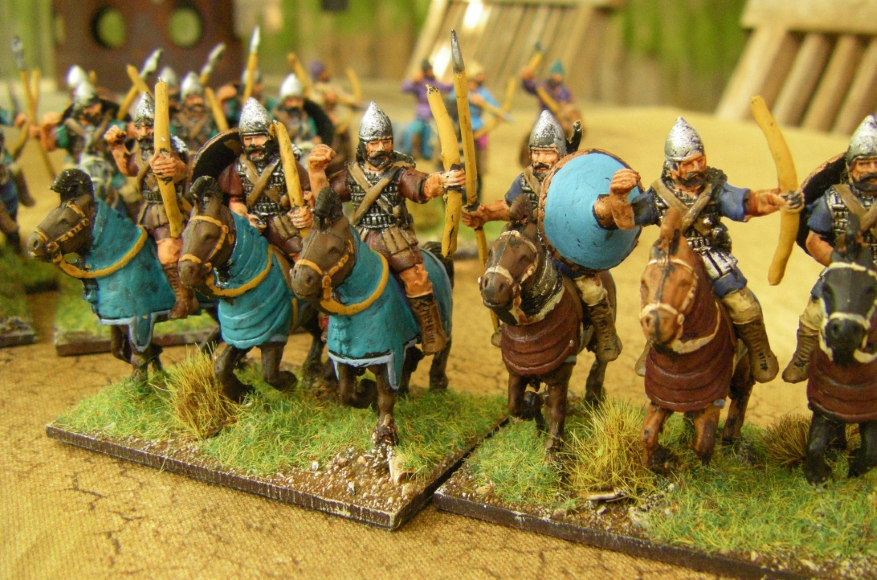 The chariot duel now erupted — a thunderous melee of bronze wheels, snapping reins, and colliding war-beasts.
Though equal in strength, both sides locked horns in a grinding, splintering contest of brute will and tactical steel.


But even as chariots clashed in this thunderous deadlock, the rest of the Sargonid army had already begun to bleed away.
The centre had by now been gutted, with even the mighty hand of Marduk now pointing to the destruction being inflicted on their ancestors by the Assyrian combat infantry. The Sargonid chariots had vacated their left flank, but even their arrival on the right had done little to reconstitute and bolster their under pressure forces, who now threated to buckle under pressure too, from triumphant Assyrian warriors sweeping across the field like a biblical plague of iron.


Sensing the moment, the early Assyrians drove home their advantage. They hurled themselves upon the remaining mass of Sargonid heavy infantry with unrelenting fury, blades flashing in a storm of death, seeking to push the already-fraying enemy beyond breaking point.
The clash rang out like temple bells of doom — but the numbers no longer lied. The Assyrians were everywhere. The Sargonids, brave but broken of spirit, were running out of space, men, and hope.
The Tales of Sargon of Assad, as chronicled in Assyrian Poetry
"Campaigns in The Zagros:"
He marched where the Zagros winds blow,
Through highlands and valleys below.
With columns so tight,
They'd drill with delight —
Like Sargon had read NATO’s Five-O.

The only honour left to the Sargonids lay with their chariots — their 3D printed reins giving them seemingly no advantage against the rain-less Newline cobbled-together and re-crewed Hittite boxes on wheels facing them in wallpapered insolence.
Yet even here the valiant efforts of the Sargonid commanders could not stem the tide.
The battle line was about to collapse like a breached dam, warriors starting to think about fleeing as their ancestors — the very ghosts of their blood — cut them down underfoot.
The Neo-Assyrian Empire

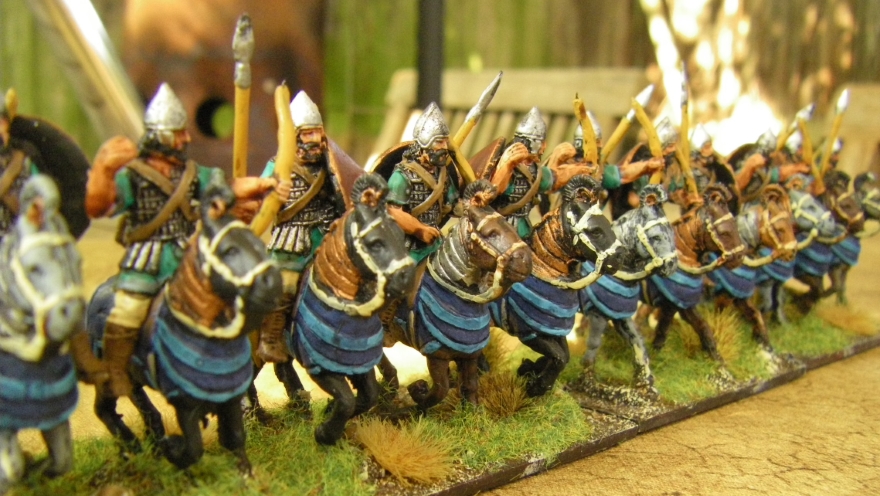 And so it ended, not with a noble last stand but with a rout as the Assyrian infantry swept every last Sargonid footman from the field.
Even with supposedly one less horse per chariot (if you don't look too closely), the ancient Assyrians had still dramatically claimed their improbable and sweeping victory.
The gods of war had smiled on the old blood that day — and left the house of Sargon weeping in the dust.
Click here for the report of the next game in this competition, or read on for the post match summaries from the Generals involved, as well as another episode of legendary expert analysis from Hannibal
Post Match Summary from the Assyrian Commander, Elqosh, Gods Arrow
Spoken with great ceremony beneath the smoking ruins of the Rebel Host's camp, a goblet of date wine in one hand and a faint whiff of smugness in the other
 Behold, ye sons of the true Assyria! Today we have not merely won a battle—we have corrected history! We have taken up the bronze rod of righteousness and smacked it firmly across the backside of degeneracy!
For who were these rebels? These so-called warriors of the era of Sargon of Assad? Not Persians, not Medes, not even suspicious Hittite hat-enthusiasts. Nay! These were our own blood! Our descendants! Our legacy—turned sour like poorly fermented camel’s milk!
I have seen them—these soft-palmed, perfumed Gen Z Assyrians—lounging in their palaces, scrolling cuneiform tablets on polished obsidian screens, asking one another if they feel ‘emotionally aligned’ with the god Ashur before a battle. They paint their shields in pastel shades, for pity’s sake! Their war cries sound more like feedback surveys!
And so they came to fight. Or rather, to attempt fighting. And what did they bring? Flashy four-horse chariots—four! Four horses! I ask you, what sort of man needs four beasts to pull him into battle? In my day we had three. Three was plenty. You learned to fight harder when the fourth horse was metaphorical. You learned to struggle! And struggle makes strength! You, you with the too-many horses and too-soft sandals—you wouldn’t last five minutes chasing a Gutian over a rocky ridge with only a barley biscuit and a grudge to sustain you!
The battle? Simple. We crushed them straight down the centre. No frills, no frolicking. Just the sacred line of shield and spear, advancing as one—like a wall of tax collectors at a debtor’s gate! Their infantry melted before us. Not because they were outnumbered—oh no!—but because they were outclassed, outfought, and out of breath after five paces!
And where was their much-vaunted cavalry? Nowhere! Lost in the brambles! Galloping in confused circles around the hillocks like drunk couriers trying to deliver furniture to a house that doesn’t exist!
We, the old lions of Nineveh, brought forth the heavy chariots—true chariots! Chariots that mean it. Our wheels roared like thunder, our axles sang songs of war, and our three-horse teams did not falter! We trampled them flat—flattened their egos, their hair oils, and their 'expressive neck jewellery' all in one glorious charge!
And when their chariots finally appeared, all late and glistening, like pampered donkeys arriving at a feast they weren’t invited to—it was too late. The centre was gone. Their morale shattered like a cheap alabaster lamp under the weight of a real man’s sandal!
Let this be a lesson etched in basalt! War is not won with extra horses, scented beard balm, or a hashtag carved on your cuirass. War is won with grit. With guts. With chariots that roar, not preen!
So go now, record this truth in your tablets: that Elqosh, God’s Arrow, has not only defeated his enemies, but his own descendants! And not because they were weak—but because we were strong. Still are. And always will be.
Now bring me a rebel's tablet—I wish to update their appalling grammar and repurpose it as a proper chariot maintenance log.
Hannibal's Post Match Analysis
 O thou dusty relic of overconfidence, thou moth-bitten standard-bearer of self-congratulatory rot,
How long must the sun rise only to shine on thy forehead so that thou mayst see thy own reflection and applaud?
O thou dusty relic of overconfidence, thou moth-bitten standard-bearer of self-congratulatory rot,
How long must the sun rise only to shine on thy forehead so that thou mayst see thy own reflection and applaud?
Let us speak plainly, Elqosh. Let us set aside the wreaths, the trumpets, the fawning scribes with ink-soaked scrolls clutched in trembling hands — and let us consider what truly happened in thy battle against the so-called “rebels” of the House of Sargon.
O thou senile cymbal of self-praise, thou hoarse herald of hyperbole! Elqosh, I have heard your speech — and I must say, I have not seen such thunderous nonsense hurled at history since a drunk Gaul tried to rewrite the Twelve Tablets with a ham.
You strut about as if you had bested the hosts of Babylon, outfoxed a Median fox, or ridden roughshod over the Egyptian elite — but let us not gild this particular turd: you beat an army of moisturised adolescents.
Yes, adolescents. Barely weaned from their perfumed tutors, still sore from their eyebrow-threading appointments, and not yet old enough to understand that spears are sharp at the pointy end. Your enemies wore eyeliner, Elqosh. They brought tactical manuals printed on recycled reeds. One was seen taking a selfie with his own reflection in a polished shield. And yet you declaim your victory as though Marduk himself wept in awe.
You say they had too many horses? Four per chariot? Oh yes, truly decadent. But tell me, O Hoarder of Bronze Nostalgia, what sort of general is undone by a horse surplus? Is this a battle or a livestock audit? Are you conquering the Sargonids, or gatekeeping the correct number of quadrupeds per axle?
And your centre? “Advanced like a wall of tax collectors”? I saw it. It advanced more like a grumbling bread queue. A slow shamble, encouraged only by the stench of your personality bellowing from the rear. The enemy fled not in fear, but in sheer disorientation. Half of them were still composing interpretive hymns to Ashur when your lot arrived.
And the cavalry? Yes, they were lost. Yes, they wheeled uselessly in the hinterlands. But I ask you — who gets outmanoeuvred by their own interns and then calls it a masterstroke? You claim their cavalry galloped “in confused circles” — and so they did, because they were looking for the exit! A teenager’s loyalty lasts until the next tunic change. Their commander was last seen riding directly into a bush and refusing to come out until someone brought him a fruit platter.
As for your chariots — three-horse teams, yes, yes, very traditional. Very noble. Very safe. Your wheels “sang songs of war”? More like they shrieked the chorus to an old folk dirge as they narrowly avoided flipping on a mound of discarded sandal tassels. You speak of flattening egos — I saw a rebel captain knocked over by a shield he dropped himself.
And that final flourish — that smug little toss of the stylus — "Bring me a rebel’s tablet so I may correct their grammar!" — Oh, marvellous! Truly, the mark of a great general: post-battle copy-editing. Next will you have their corpses redrawn in better posture?
Let me put it plainly, Elqosh: you did not defeat a rebellion. You disrupted a youth fellowship retreat with delusions of grandeur. They came to the battlefield with hashtags. You brought spears. Of course they lost. But don’t mistake that for greatness — mistake it for what it was: an elderly man knocking over his own grandchildren and then demanding a bronze statue for restoring order.
You are a tin-pot thundercloud, Elqosh — full of sound, fury, and aged bravado, signifying only that your opponents had better skin but weaker wills.
So etch your “lesson in basalt,” if you must. Just make sure the tablet is soft enough to be repurposed when the next band of children with swords turns up in the next game and beats you while you’re too busy preening.
Click here for the report of the next game in this competition
You may also like....
Game 1 Assyrian vs Classical Indian
Game 3 Assyrian vs Later Assyrian Empire & Sargonid