

Biblical Warfare at Attack! 2025
Assyrian vs Hittite
Game 1 Assyrian vs Classical Indian
Game 3 Assyrian vs Later Assyrian Empire & Sargonid
With some of my stuff on the Bring & Buy already sold, and a lengthy lunch break until the afternoon game it was now time to head into the golden stone clad streets of Ye Olde Devizes Towne and have a classic West Country Chicken Tikka Panini and frothy coffee before returning refreshed to the venue for the afternoon session of big wheeled chariot action
Following the narrowest of defeats in the first round the Assyrians were matched up against their legendary foes (I think?) the HIttites, all the way from Hittitania and their capital city of Hatti (again, I'm largely guessing here).
Owning a Hittite army in 15mm, and having some "converted" (aka re-crewed) Hittite chariots in my army led me to falsely assume I might know what I was facing this afternoon.
The Hittites are a classic Biblical army, some bow-armed Light Chariots, the option to upgrade an unfeasibly large number of them to Heavy Chariots Impact (not all of which are however allowed to be Elite) and the usual mishmash of Medium infantry swordsmen, spearmen and archers.
Tucked away in the bowels of the list are also 4 Impetuous Gasgan warriors, good for overpowering enemy infantry, and buckets of Light Infantry to screen the army from enemy shooting.
These many options, along with Syro-Caananite chariots too allows the list to be very flexible, with multiple ways of putting it together.
The lists for the Assyrian and Hittite from this game, as well as all the other lists from the games at Attack can be seen here in the L'Art de la Guerre Wiki.
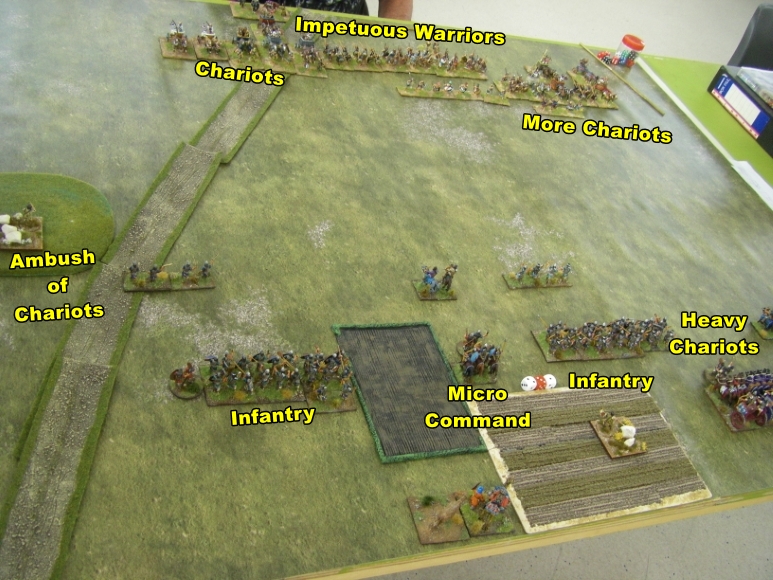
On a sun-blasted plain halfway between the walls of Assur and the golden-gated cities of Hittitania, the two great war hosts met in the shadow of fate.
The field stretched wide, like a god’s anvil, flat and merciless save for a gentle mound rising on the Assyrian left, and the patchwork of uneven farmland behind them — no shelter, only hardship.
The Hittites came in strength. Their war-carts, lean and many, formed a thunderous column on their right — opposite the Assyrian left — while a dense phalanx of bronze-clad Gasgan and Hittite warriors surged forth in their centre, teeth bared, blades gleaming, chants echoing.
More chariots guarded the Hittite left flank, cosying up against the table edge to give themselves moral courage and a secure flank.
The Hittite Military
The Hittite military, forged in the crucible of Anatolia’s rugged hills and broiling plains, emerged as one of the most formidable war machines of the late Bronze Age.
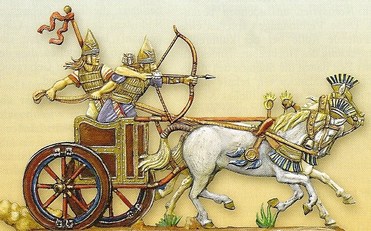
It combined the grim resilience of disciplined infantry with the speed and terror of the light, two-man chariot — the Hittites' signature battlefield asset.
These chariots were sleeker and faster than their Mesopotamian rivals’, and were often seen darting across battlefields like angry hornets, stinging and wheeling away before the enemy could properly retaliate.
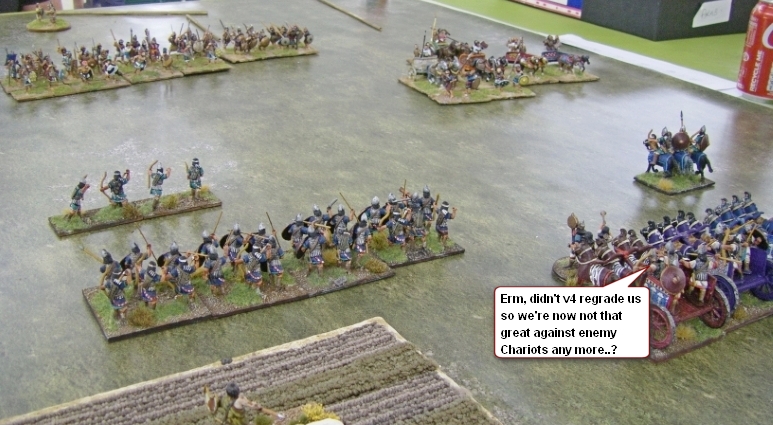
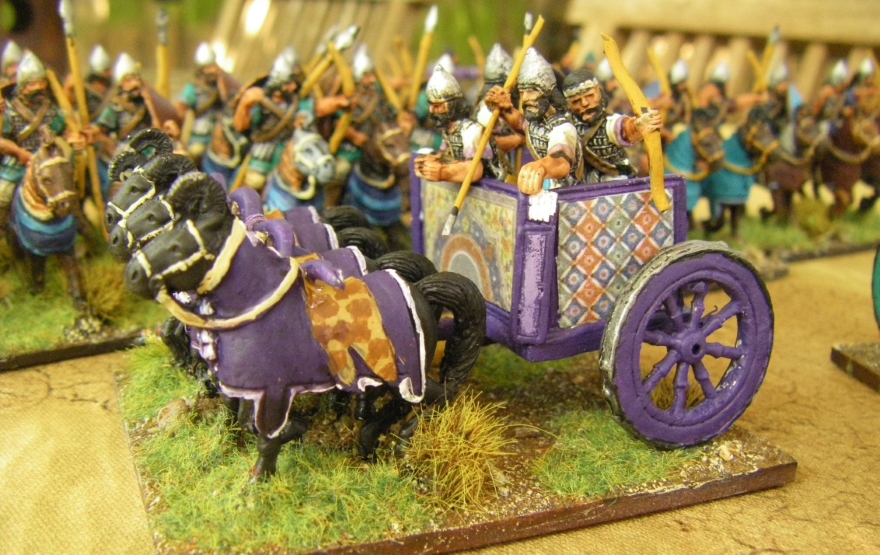 The Assyrian host had answered the Hittite deployment in kind. Assyrian Guard Infantry stood stern and silent in the centre, shields interlocked like the gates of Nineveh, but in a slightly less imposing, "loose formation infantry" sort of way.
And on their right — ah! — the heavy chariots of Assur, strange triple-horsed beasts of burden (even stranger for having 4 horses in this particular battle) pounded the dust. Armoured from axle to wallpapered apex, bristling with spears and standards, they took their place of honour at the right hand of the Assyrian Host
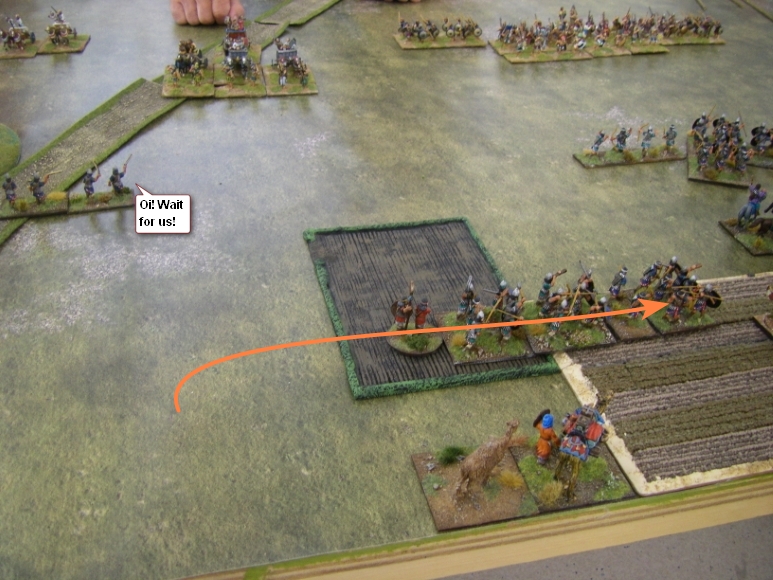
But doom already stirred on the Assyrian left.
Faced with the rumbling tide of Hittite war-carts, the Assyrian footmen quickly calculated the combat factors of them against loads of chariots in open ground, and on concluding the mathematics, totally lost their nerve.
Like reeds before the flood they turned and ran (do reeds run?), fleeing towards the broken fields behind them where wheels would flounder and the Hittite charioteers spears could not reach.
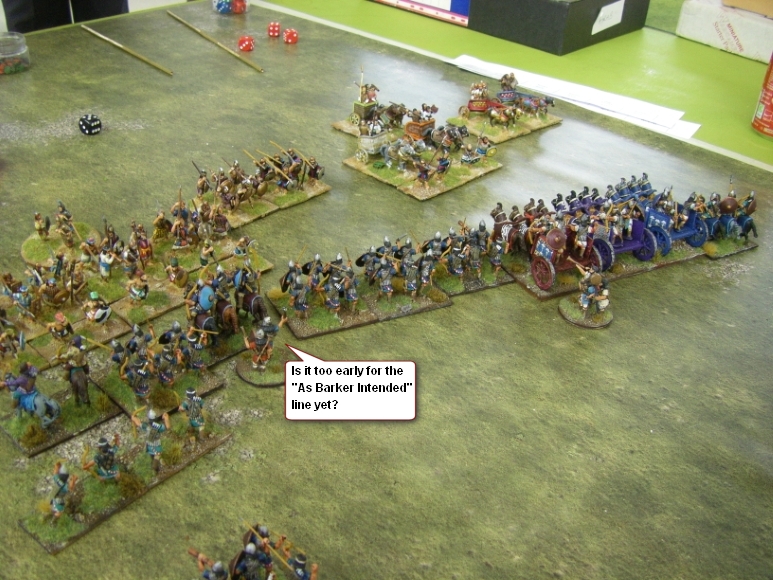
 The infantry centres of the two lines looked set to crash into one another like two rivers in flood meeting at a confluence in a wild and furious maelstrom.
The wild men of Hatti were hurling themselves forward, their courage as reckless as it was fierce, keen to get fighting while the Assyrians advanced cautiously, holding a solid line of bronze mixed with a grim discipline, standing as one in the knowledge that that really did need to stand still at some point and hope the Impetuous Gascans attacked them, well, "impetuously".
The Hittite Military
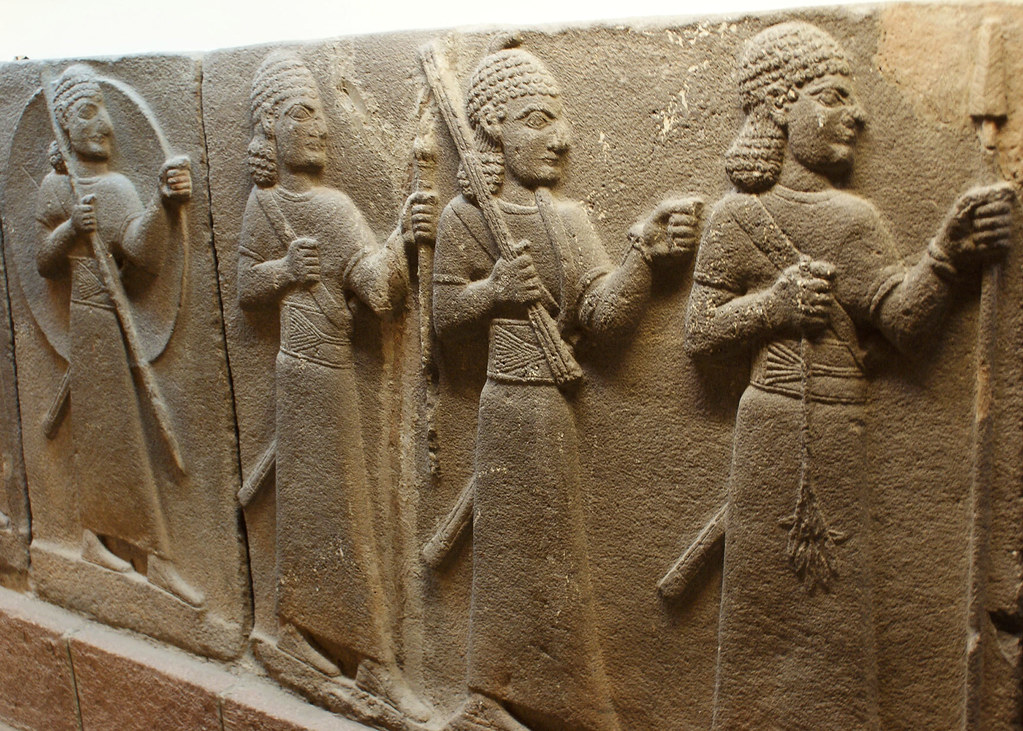
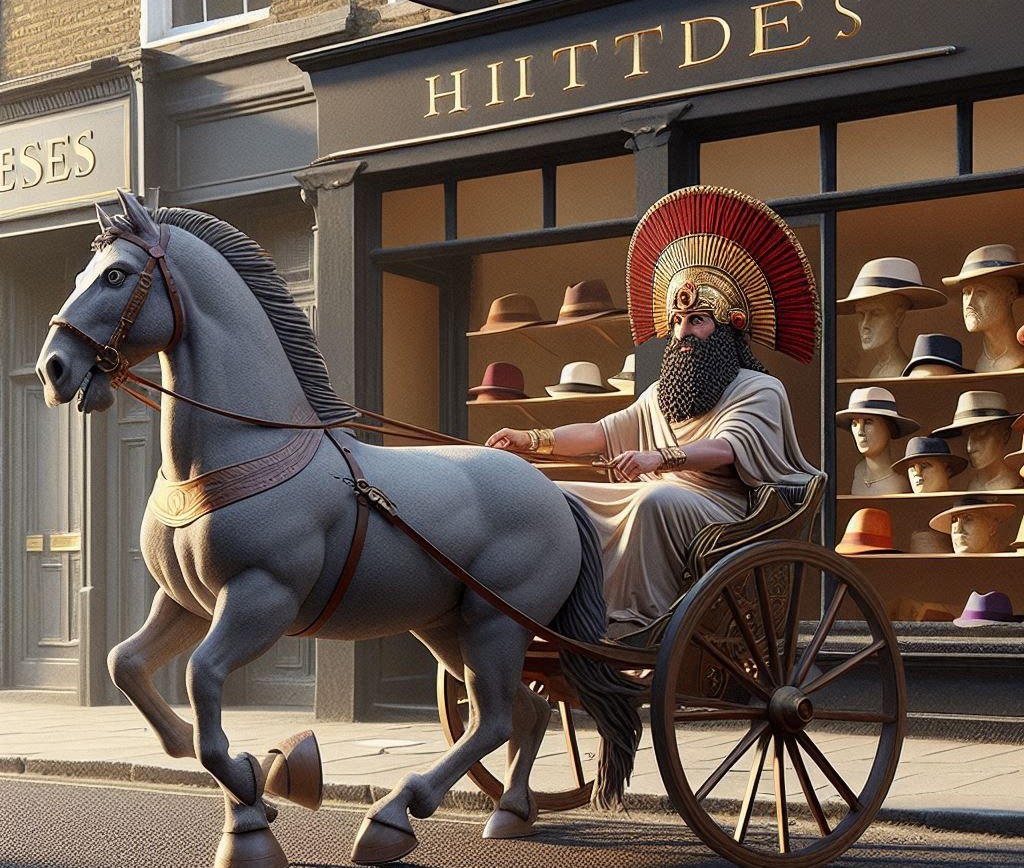
However, what many modern scholars are too embarrassed to mention is the Empire's early and almost fateful flirtation with flamboyant headwear.
The capital, Hattusa, boasted an unusually large guild of milliners, whose influence on civic life cannot be overstated.
For a brief and bizarre period in the 16th century BCE, the Hittite High Command experimented with what became known as the Hatt Doctrine — a belief that enormous, decorative hats (or “Hatts”, in the old tongue) would confuse the enemy, dazzle their vision, and inspire awe among allied troops.
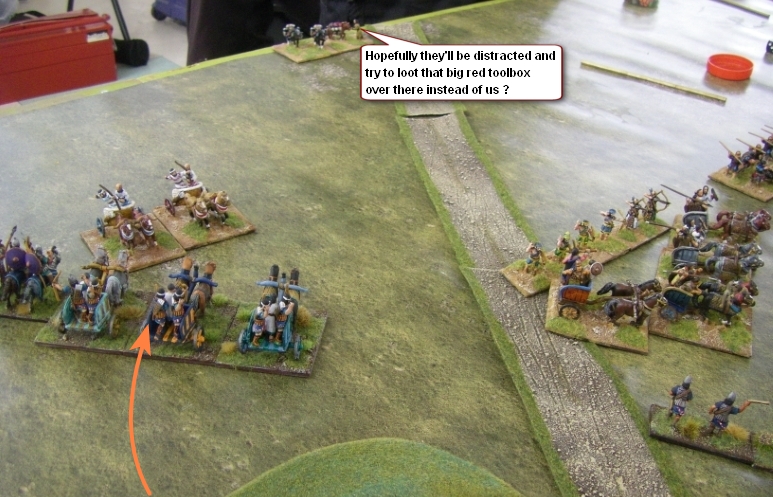
Then, from the other flank, came the sound of thunder behind the hill.
No, not a disturbing toilet-based incident arising from a particularly fierce Assyrian stew consumed in camp the night before, but instead, over the brow of the lonely rise on the Assyrian left, there burst three swift Assyrian chariots !
They were armoured yet light, swift as arrows and each packed with archers. Alongside them rode Assyrian cavalry — lean, slightly squishy, and most of all hungry for plunder.

They had looped unseen around the battlefield, and now they descended upon the Hittite right — drawn too far forward in pursuit of fleeing foot — like lions into the goatfold. The Hittite camp, hitherto untouched, now lay bare and unguarded behind a scattering of startled carts.
Could the Hittite commanders strip enough chariots from their furious advance to turn and face this new threat? Or would they be forced to gamble their all on breaking the Assyrian line before their own camp was reduced to ash and spoil?
In the centre, the meat-grinder of bronze started up with a fearsome grinding noise, as if an especially expensive and upmarket Miele Bean to Cup Coffee Machine had somehow gotten fed a diet of Aldi's finest roastery beans.
The Hittite and Gascan infantry struck fist, a wave of flesh and bronze that crashed into the Assyrian line of cavalry and infantry who in turn fought furiously to hold their positions against the tide of biblical maniacs assaulting them with seemingly boundless vigor and a range of hand weaponry cast in bronze.
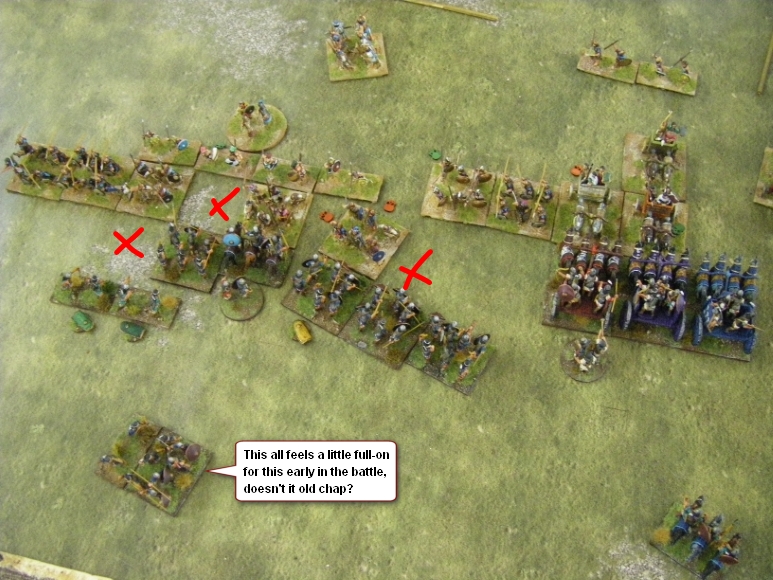
Blood fell like rain. Spears broke, shields cracked, and the cries of the wounded filled the dry air.
Chariot wheels hummed and shrieked as the Hittite right wing pushed forward into the space vacated earlier by chariot-phobic Assyrian infantry, relentless as the desert wind in their advance.
As the two teams of chariots clashed as well, it only seemed like a matter of time until the more numerous Hittite forces would begin to lap around the left flank of the Assyrian army.
The Hittites
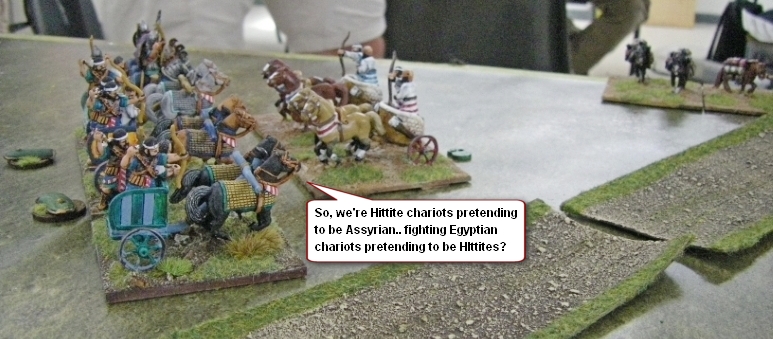
Yet the raiders were already at the gates.
The Assyrian light chariotry pressed on toward the Hittite baggage train with ruthless precision, scattering the few defenders like leaves.
A pitiful rear-guard of Hittite carts attempted a stand, but it was too little, too late — arrows fell like locusts, and the cries of despair echoed across the plain.


Back in the centre, the weight of Hittite bodies began to tell. The Assyrian line wavered. Men faltered. The ground, soaked in blood, grew slippery beneath their sandals.
As Hittite chariots suddenly appeared from the Assyrian left and raced right behind the Assyrian front line in an unstoppable wave, the psychological blow landed like a hammer. The Assyrians now faced death ahead and slaughter behind. The choice was clear: fight forward, or die where they stood.
Some fought like lions. Others (of course) died like dogs.

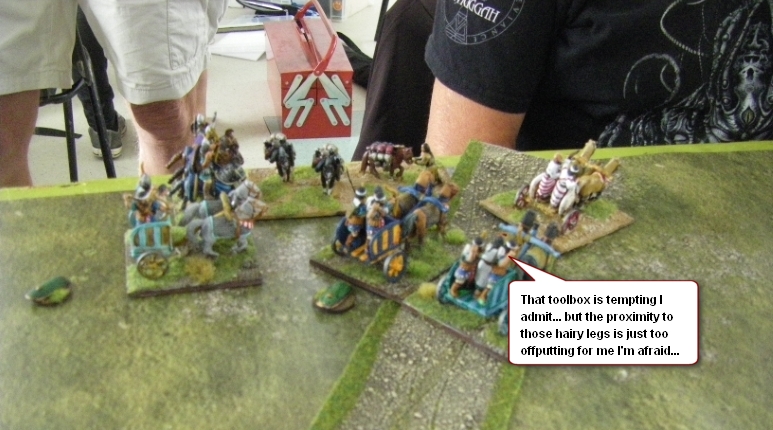
The Assyrian chariots were now joyfully looting the Hittite camp, stealing myrrh, frankinsense, any portable electronic items they could find, and of course gold.
The remaining Hittite defenders stood shellshocked as the Assyrians refused to chase them away off table, instead pouring arrows relentlessly in an attempt to shoot them down where they stood.
L'Art de la Guerre hint - Any unit that is destroyed counts as 2 losses towards the army break point, whereas one that is wounded, OR which flees off table only counts as 1 loss.
A unit which is wounded AND which flees or evades off table still only counts as 1 loss, so it is better for the Assyrians here to try and destroy the Hittite chariot by shooting alone rather than to charge it and risk the certainty (in this position) of it evading off table

In the centre, the tide of bronze surged like a rising flood. The Hittite infantry, packed dense as a stone wall, pressed forward with the momentum of doom itself. Shields locked and voices raised in thunderous unity, they battered the Assyrian line like a ram upon a gate.
The Assyrian guardsmen, veteran and proud, stood firm — but their line began to bow and bend, the cohesion fraying under the sheer, merciless pressure. With each thunderous footfall, with every guttural war-cry in the Hittite tongue, the Assyrians were driven backward, step by blood-soaked step.
The Hittite Military
At its peak, elite units of “Feathered Spearmen” and “Plume Charioteers” sported towering felt creations adorned with bronze studs, animal horns, and the occasional live bird.
While visually striking, these millinery monstrosities proved less effective in high winds, and during the disastrous Battle of Lake Danuzzar, dozens of Hittite soldiers were found blinded by their own brims or impaled upon the rigid plumage of their comrades.
The strategy was quietly abandoned.
And then, over the haze of dust and the scream of wounded men, came the unmistakable sound — the rolling snarl of chariot wheels.
Hittite war-carts, like the harbingers of divine wrath, emerged behind their infantry with banners fluttering and weapons gleaming.
The effect was electric. Hittite spearmen surged forward with renewed frenzy, their courage stoked by the iron thunder at their backs, their eyes gleaming with the fire of imminent victory. They struck again, not like soldiers, but like wolves that had caught the scent of a broken herd.

For the Assyrians, the moment was grim and sudden — the veil of hope lifted, and beneath it lay only ruin. As the enemy chariots arced around to their rear, their vision filled with a horror that froze the marrow. Behind them now — dust, noise, and death on wheels.
The ancient instinct gripped every Assyrian heart: no retreat, no rescue, no mercy. To survive, they had only one path — forward, through the storm of Hittite steel that barred their way. They fought not to win, but to live, hacking at foes before them while doom crept at their backs.

Yet the fire of resolve did not burn evenly.
Not all Assyrians held fast beneath that terrible sky. Among their ranks, some faltered — eyes wide with fear, limbs trembling as the weight of battle crushed down upon them. The song of courage died in many throats.
Their line, already straining, now tore open in places as Hittite spears found gaps and drove deep. These men, who had marched in order and pride that very morning, now scattered, stumbled, and fell beneath the red tide.

Another surge from the Hittite host crashed into the faltering line like a wave into shattered stone.
Screams rose, weapons fell, and the Assyrian centre began to collapse in earnest — not in glorious defiance, but in the bitter silence of defeat.

But the tide, even now, was not yet fixed. On the far right, the Assyrian heavy chariots had turned the tide. One by one, they crushed their lighter foes, splintering them under wheel and hoof.
As the Hittite left collapsed, those same juggernauts turned inward, forming a steel-tipped wedge to shore up the faltering Assyrian centre.
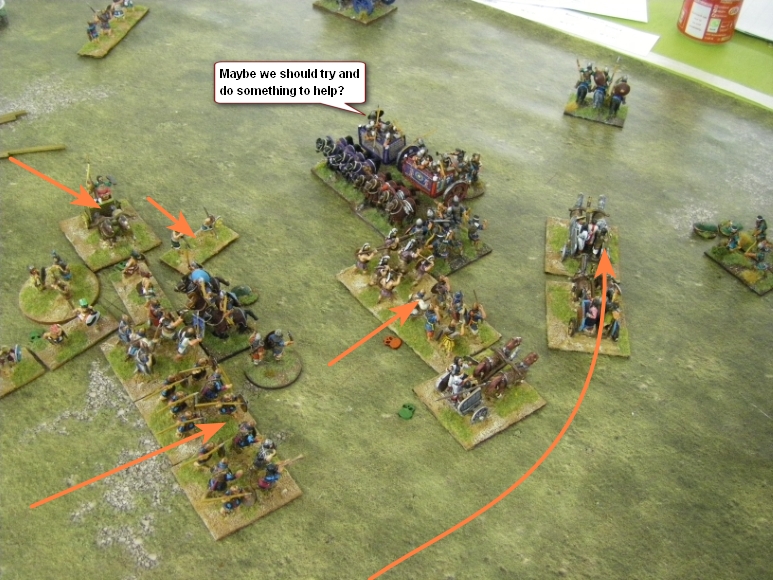
Though surrounded, the Assyrians rallied.
They pulled back, not in rout, but in grim cohesion, like a scorpion curling its tail.
The Hittites pressed on — everywhere at once, yet nowhere with certainty. The Assyrian lines, scattered by desperate evasions, had left the Hittites chasing shadows.

The Hittite Military
Still, for a time, the empire teetered on the edge of naming itself the Hattites, in honour of both the capital and the national obsession with battlefield couture.
Cooler heads (and flatter hats) eventually prevailed, and the military returned to more practical innovations — centralised command structures, formidable siege engineering, and effective treaties backed by the threat of very un-hatted chariots.
Even so, a ceremonial feather or two could still be glimpsed on certain generals, a subtle nod to the time when fashion very nearly triumphed over function

 The air thickened with cries, with the clanging of weapons, with the sickening thuds of death dealt and received. For the scattered Assyrians, imminent defeat was not a threat; it was a promise. Their choices narrowed to two: to die clawing like lions, or to fall like broken curs under the hooves of Hittite charioteers.
The Assyrians rallied, and took what opportunities they could grasp. Isolated packets of Hittite infantry and chariots, having outrun their comrades, now suddenly fell prey to the desperate and resurgent Assyrian archers and pouncing chariots.

The ambushers from the hill had not finished.
With the camp plundered, they rained death on the few Hittite chariots still trying to regroup, felling them one by one.
The skies darkened with Assyrian arrows, and one by one, the last defenders fell.

Suddenly — shockingly — the spell broke. The heart of the Hittite army, brave and bloodied, shattered. Warriors threw down spears. Charioteers wheeled away. The cries of victory from the Assyrian survivors rose like smoke into the twilight air.
Victory had been snatched from the open jaws of ruin. The Assyrians, bloodied and broken, had bent like reeds, but not snapped.
They had won — by grit, by steel, and by the desperate courage of a few. A triumph undeserved, perhaps, but one the gods had allowed nonetheless.
Click here for the report of the next game in this competition, or read on for the post match summaries from the Generals involved, as well as another episode of legendary expert analysis from Hannibal
Post Match Summary from the Assyrian Commander, Elqosh, Gods Arrow
Spoken beneath the Sacred Banner of Ishtar, amid the debris of battle and several looted Hittite hatboxes
 Attend, ye sons of the Crescent River! Listen well, ye warriors of Ashur and hammerers of Hattusa! For today, once more, the earth has quaked beneath the wheels of Assyrian glory!
Let it be known across the four quarters: the Hittites are vanquished! Their banners lie trampled beneath our sacred sandals, their pride cast down like a shoddy bitumen seal in a badly waterproofed palace bathroom!
Yes—YES—I hear whispers, feeble mewling from the throats of lesser men, saying ‘O Elqosh, did not our centre give way like badly set plaster under the strain of a too-heavy lintel?’ And to them I say: silence, fools! It was a ruse! A test! A spiritual exercise for the men, to harden their hearts with the bitter vinegar of momentary instability!
And again, I hear: ‘O Elqosh, did not the Hittites—led by that ludicrous haberdasher of a general from the hat-worshipping city of Hatti—did they not sweep behind us like a poorly supervised apprentice with a rogue floor sander?’ A fair question. A narrow concern.
But let me explain: our army was permitting them to go around the back! Yes, to draw them in, to give them a false sense of advantage—like when you let a lesser man win at chariot draughts before conning him into buying a cracked vase at three times the price
Our men, brave and wise, withdrew with the precision of a well-cut mitre joint. Not fleeing—never fleeing!—but performing tactical reversals of position. Fluid. Graceful. A retreat only in the sense that a sponge retreats when pressed—it absorbs, bounces, resurfaces victorious!
Now mark this, O ye chroniclers of greatness: the tide turned not by chance, not by divine whimsy, but by the brilliance of my hidden plan. A squadron of our chariots—mighty steeds of ironwood and vengeance—concealed behind the hillock known as Mount Quiet Bit That No One Looked At, burst forth like divine thunder from a secret scroll! They swept ‘round the flanks, past the onrushing hat-fanciers, and struck at the heart of the Hittite camp!
Tents overturned! Livestock liberated! A very expensive personal grooming mirror of the Hittite commander—shattered! Their morale broke faster than a stone drill hitting knotwood!
Let it be recorded: it was their hearts that failed, not ours! It was they who ran, clutching their ceremonial headwear and squealing like overfed court eunuchs when the chariots came! And all this, just moments before—purely theoretically—we might have briefly reconsidered continuing the fight.
So raise the standard high, O warriors! Today we permitted the enemy some fleeting hope, only to extinguish it with fire, steel, and strategic looting! Victory is ours! The gods are appeased! And that Hittite commander—may he find solace in his fine collection of feathered bonnets and the knowledge that he was outwitted by Elqosh, God’s Arrow, Wrecker of Rear Guards, and Unofficial Inventor of the Reverse Charge!
Now… someone bring me one of those ridiculous hats. I wish to drink wine from it and laugh
Hannibal's Post Match Analysis
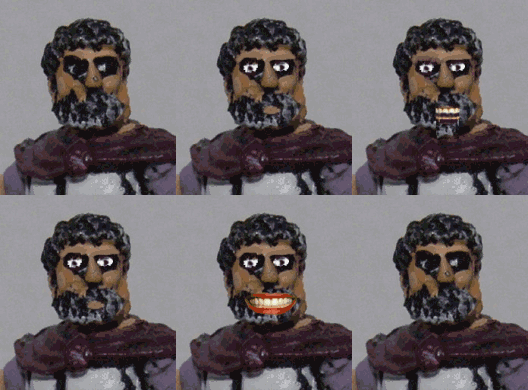 By Tanit’s cracked amphora and the sour milk of the gods, What in all the infernal scrolls of chaos did I just witness?
I speak, of course, of the recent “triumph” — and I use that term in the same spirit one might describe a collapsing bridge as “structurally adventurous” — of King Elqosh, Lord of Loud Claims and Limp Formations, in your battle against the Hittites.
This was not a battle. This was a dispersal event. A catastrophic game of "who can rout first" conducted under the withering gaze of bronze-clad professionals who clearly wanted no part in this theatre of the absurd.
Let us examine the facts, though I warn you, doing so may cause the brain to leak slightly through the ears:
- The centre collapsed within minutes, as if someone had replaced your infantry’s courage with damp lentils.
- Your flanks scattered like frightened pottery merchants hearing a camel sneeze.
- Your elite units — and I use “elite” in the same ironic tone I use when describing boiled cabbage as a “delicacy” — were either ridden down, thrown aside, or in one notable case, simply walked away from the battlefield muttering something about "not dying for that man again."
And yet... you won.
I have no explanation. No rational account. The Hittites, in their moment of victory, appear to have been overcome by an existential malaise. They simply stopped. Halted mid-killing. Sat down, perhaps, to discuss the futility of ambition and whether conquest had any real meaning in a world where men like Elqosh continue to rise.
Some say they were outflanked. Others, that the Assyrian slingers rallied in a final act of suicidal bravado. I say: the gods were drunk.
And here’s the part that truly boils the garum: You, my half-witted Elqosh, far from acknowledging the unearned nature of your "victory", have now commissioned another statue — in gold, with optional incense burner — depicting yourself standing on a pile of fallen Hittites, arms raised, as if you had planned any of it.
I would laugh, were I not busy screaming.
And yes, as I watched this debacle unfold from the comfort of my tactical observation chaise, I noticed a strange thing: the carpet — the very same one I purchased from Mukhu at that motorway services — began to smell faintly of cardamom and burning rope the moment Elqosh’s voice was heard across the battlefield.
Coincidence? Perhaps. But the moment you raised your arms to take credit for a triumph you did not earn, the rug wilted slightly at the corners. As if it, too, could not bear the weight of your hubris.
So carry on, Elqosh. Ride the wave of accidental triumphs while fortune’s dice still tumble in your favour. But know this: Your victories are not written in bronze, nor in stone — they are scribbled in soap on wet marble, destined to vanish with the next breeze.
Your victories are not written in bronze, nor in stone — they are scribbled in soap on wet marble, destined to vanish with the next breeze.
And if you ever again claim tactical genius while standing in the smoking ruins of your own credibility, I swear I shall send you a carpet of my own before the next game. One that bites.
Click here for the report of the next game in this competition
You may also like....
Game 1 Assyrian vs Classical Indian
Game 3 Assyrian vs Later Assyrian Empire & Sargonid