
The Madaxeman
Madaxeman.com's Home Page
  • Home
  • Latest Posts
  • Links Page
  • Battle Reports
  • ADLG Index
  • ADLG Wiki
  • Malifaux
  • C London Club
  • 15mm Gallery
  • 15mm Suppliers
  • Facebook
  • The Podcast
  • 10mm
  • Consent Preferences
 RSS Feed

Britcon Game 3 vs Medieval Danish 

The Danish were in theory very similar to the Free Company I had run over earlier in the weekend so I was mildly optimistic 

The Danish list is available here 

On a terrain-free table, the Danes were cowering in a corner from the off.. 

Q: Why do Danish people never play hide and seek?
A: Nobody wants to look for them.
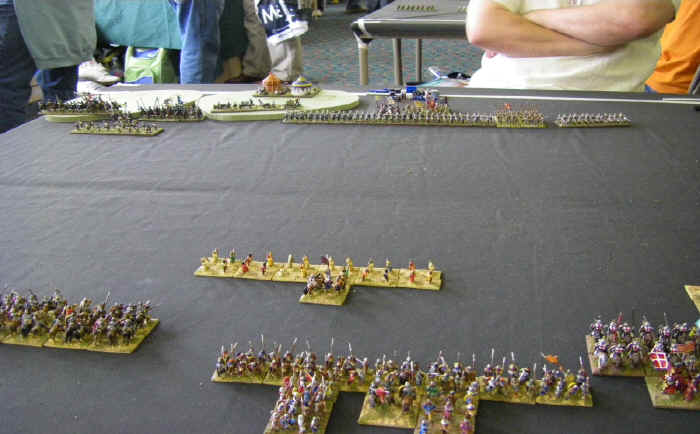
...but they still looked fairly tough to me, and a late deployment of 2 units of knights against my cavalry had caught me out badly
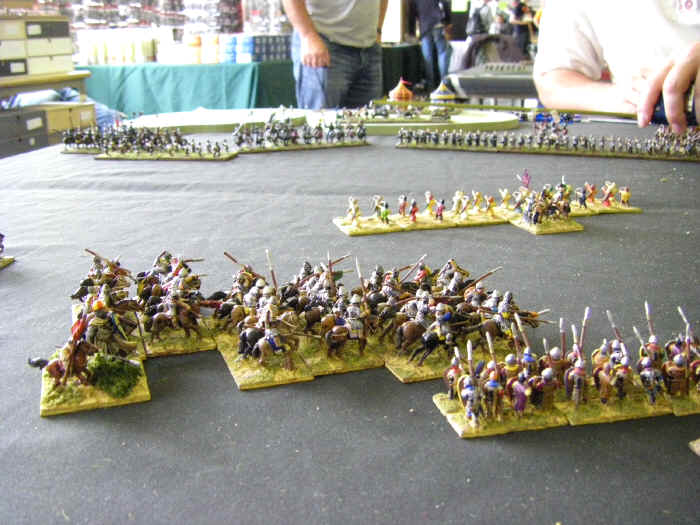
With the benefit of moving first, I attempted to redeploy my cavalry across the front of my entire army. I hoped to run down the mixed units of 2HCTW & XBow with my mounted, and avoid combat with my spears against the knights until late in the game.   

You know you are Danish when.... 

  • You have only two facial expressions, smiling or blank.
  • You buy your own drink at the bar even when you are with a group of people.
  • You find yourself more interested in the alcohol content than the name of the wine.
  • You forget how to open canned beer.
  • You start to believe that if it weren't for Denmark's efforts, the world would probably collapse pretty soon.
  • You will leave a pub if you can't find a seat.
  • Your wardrobe no longer has suits but blue shirts and mustard colored sports jackets and lots of denim.
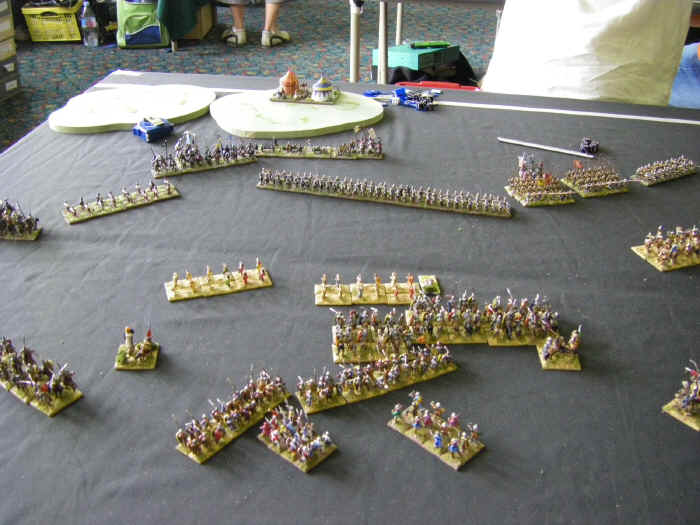
Soon it looked like my army was in such a state it might actually beat itself without intervention from the enemy at all...

But I had managed to find an isolated unit of mixed troops who were on the end of the line for the Danes. Having thought about it, I decided that the knights of the allied Crusaders were enough, as all the cavalry needed top be kept together to make sure of killing off the main mixed formations in the middle. As the knights moved up they suffered an unlucky shot and then even worse, failed a cohesion test. But they had a general with them, so they should recover soon... 

War with Denmark 
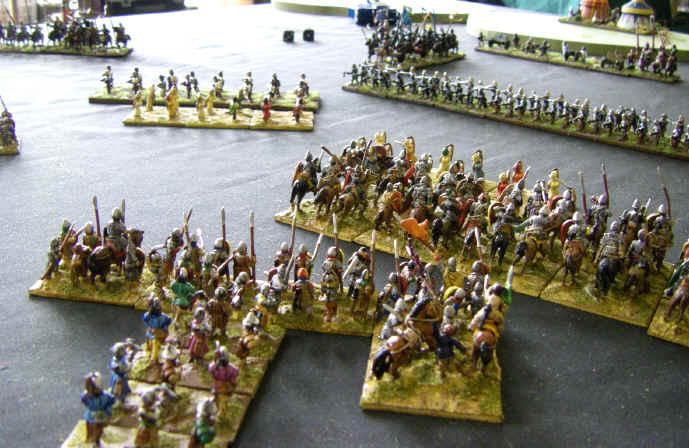
Things were now looking generally quite competent - a strong punch of mounted lancers were teed up nicely, the enemy knights were sort of out of the picture...  
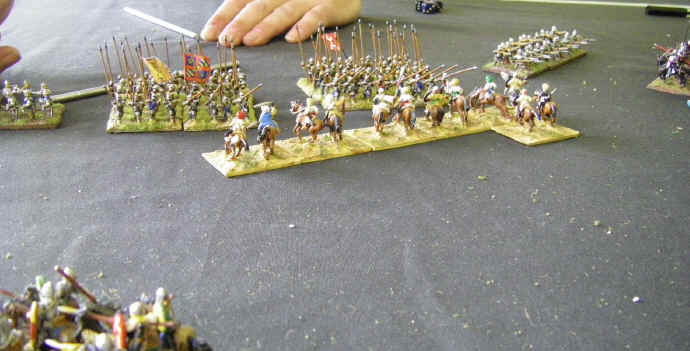
...and my light horse were keeping the pikemen bottled up 
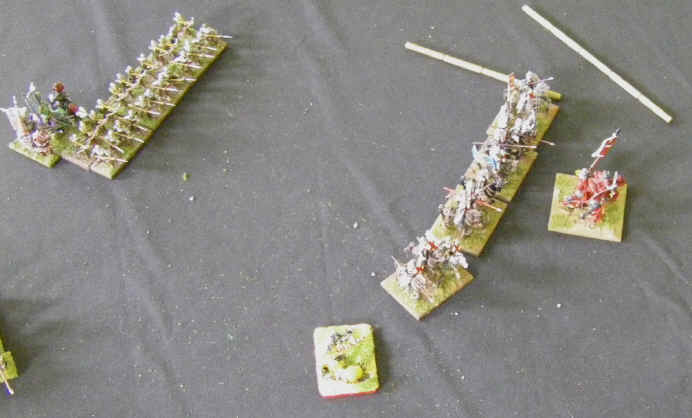
Of course, nothing is perfect... my Superior knights, led by a GENERAL, were now at FRAGMENTED against the powerful shooting of just 3 crossbowmen (who were taking full advantage of the "everything counts against Tim" rule by measuring range from the front rank, but counting all the bases shooting as its the first SHOOTING rank that is used for assessing numbers of dice...) - and next shot they routed and fled !!!

The words "Danish" and "humour" are rarely found together. The only Danish joke I have ever been told - "Can you play the violin?" "I don't know. I've never tried" - is hardly side-splitting.
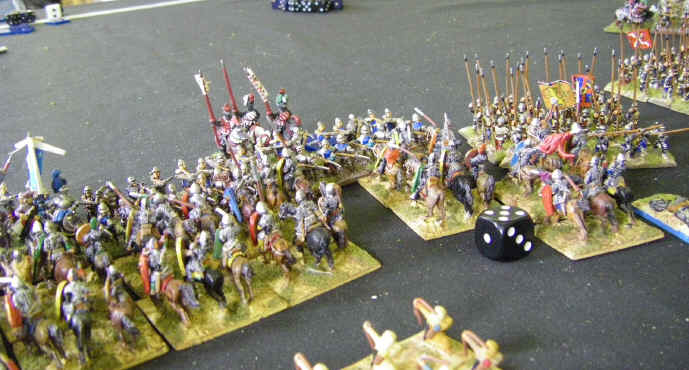
Anyways, my own lancers charged in. Some had to fight the pikemen - who were not being charged in the flank by my victorious knights - but at worst we would bounce off so hopefully it would work out OK..  
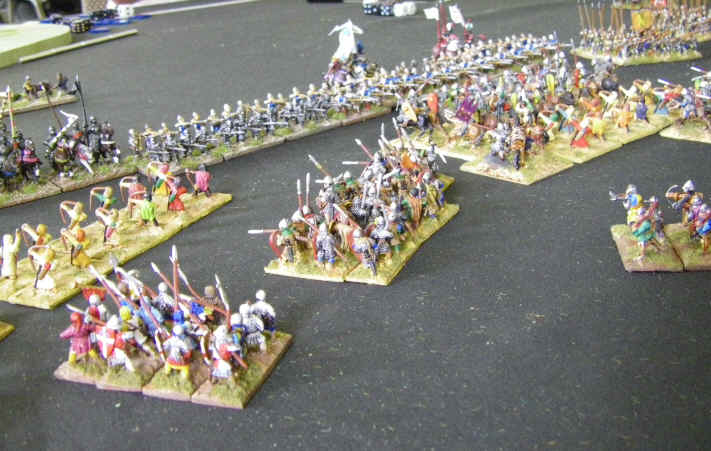
and indeed that was what happened, as my line of cavalry flinched back as far as the psiloi, ready to charge again
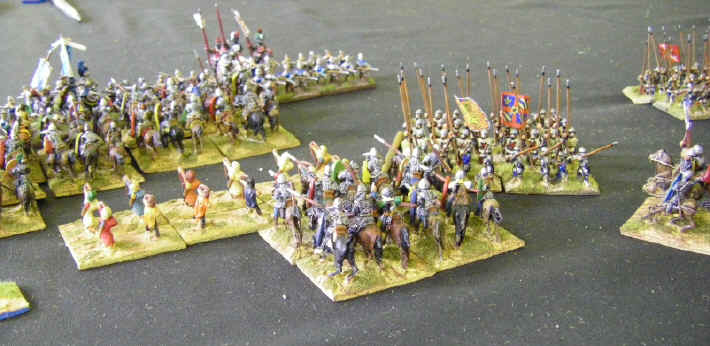
In again they went trying bravely to break the mixed formations resolve. (The Its Against Tim rule also worked here, as a mixed MF/HF formation counts as HF for cohesion tests and combat POAs when fighting mounted!) 

By now time had run out and the knights were close enough to sweep round and hit my spearmen. I intended to get my cavalry round their flank, but they had managed to get close in their charge, meaning it was impossible for me to actually do a flank charge without waiting to do about 4 or 5 turns of complicated maneuvers - and my protected spearmen weren't going to last that long ...  
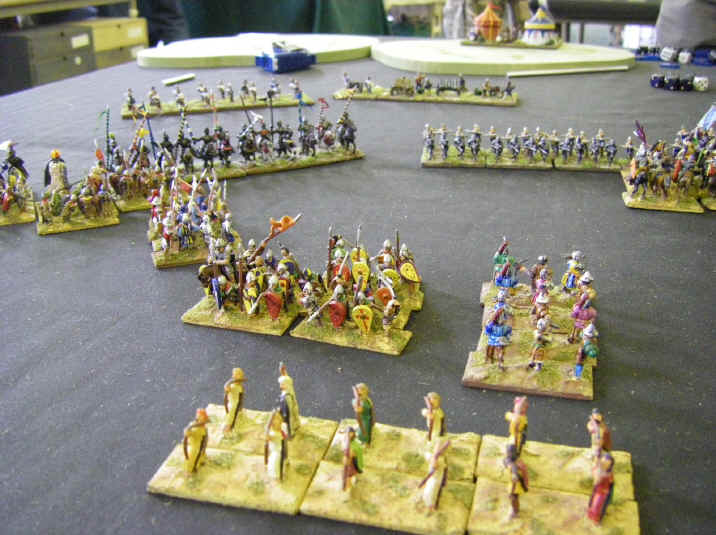
In fact, they were lasting better than my armoured spearmen, who had been run down by knights and heavy weapon men in short order, leaving a big gap in my line... 
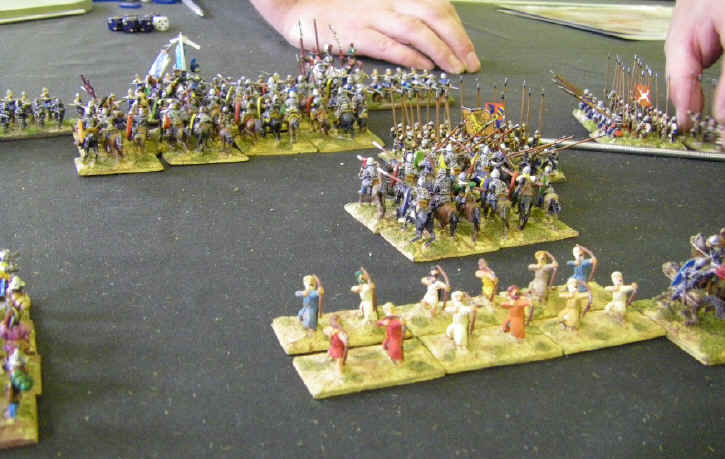
My cavalry were still charging in furiously, but ominously a pike block had executed its 90-degree-turn-and-move and was closing in on my flank... 
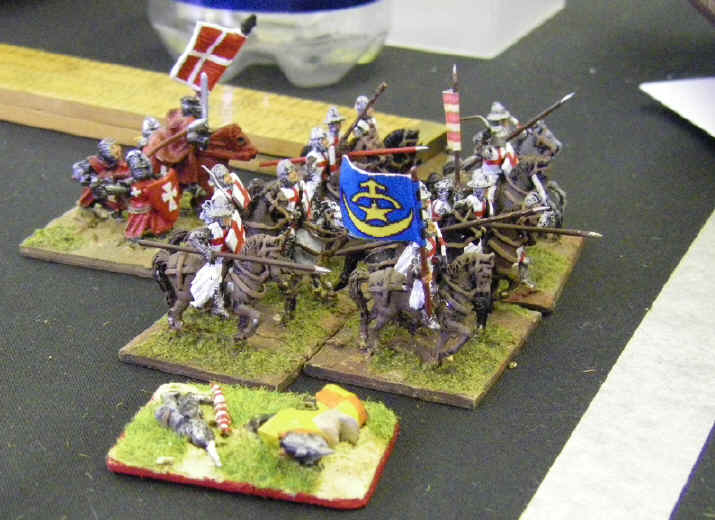
Finally, with less than an inch to spare, the Crusader general persuaded his men that they might want to hang around, and rescued their rout at the last possible moment! 

Likewise another general managed to arrest the rout of the armoured spearmen - it was one step forwards and one back for my teetering army ... 
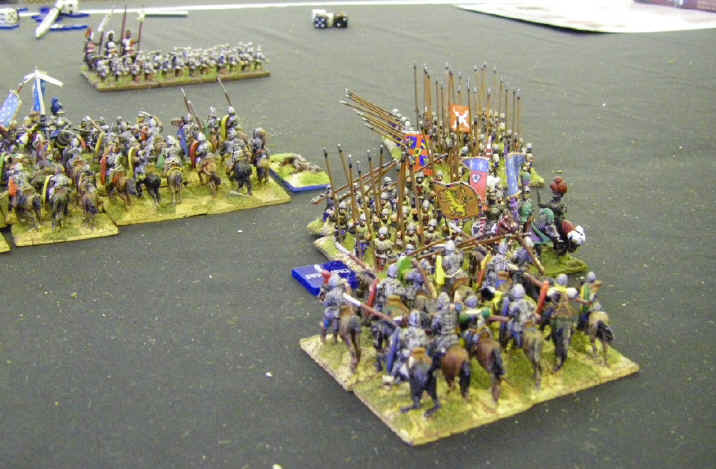
The Pikemen ground inexorably close to my engaged lancers...
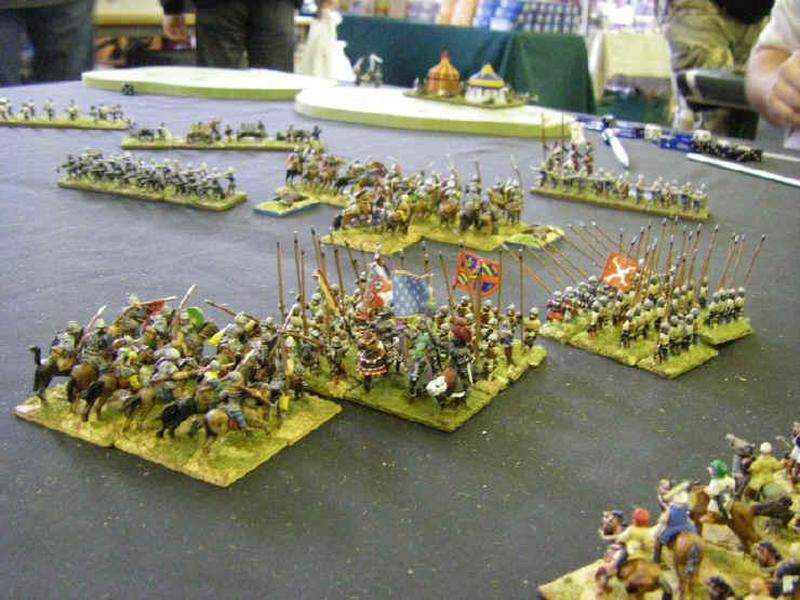
...who managed to break their opponents and pursue to relative safety in the nick of time!! 
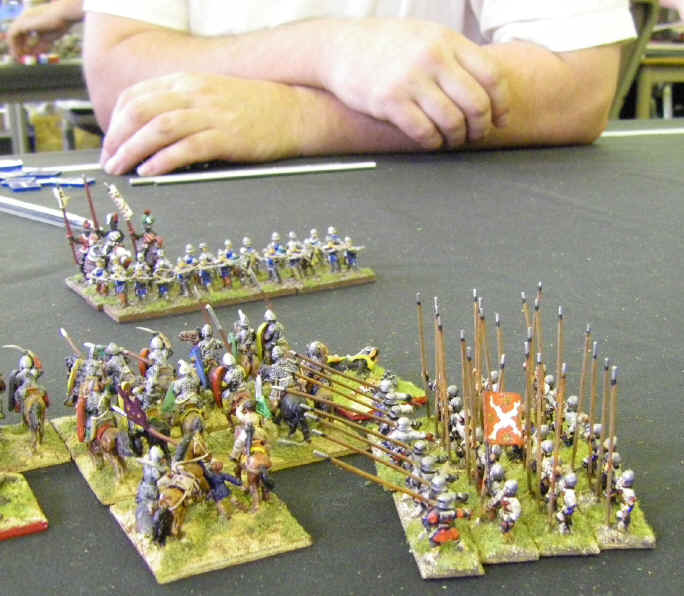
well. relative safety anyway... ouch! 

With this the game was over - a heavy loss, but by rescuing 2 routing units I had at least staved off a total defeat. 

Post match Summary

The mixed XB/Hvy Weapon formations proved much tougher than the Hvy Weapon only ones of the Free Company - 3 dice per frontage at impact due to the 2nd rank shooting was a big factor in making sure they won the all important first round and avoided the -1 cohesion test modifier for losing to lancers. 

But it may have been a very different game if my Knights had been even half competent and managed to charge in against the isolated mixed formation that was holding the flank. I had thought of sending 2 units to deal with them, but had decided that it was better to concentrate all my cavalry firepower in the one spot - in retrospect (of course - this was a mistake. If you want to hit something in FoG, hit it really hard - as a bad cohesion test or two can ruin your entire plan and will do so if that plan depends on just one unit.

It seemed strange to save a game by using generals to prevent routing units from fleeing off table and to rally them - and I am not entirely sure if this did me any good in the scoring system other than reducing the number of points my opponent scored.

Buy your own Medievals on ebay

next game


The Ancient Army List Index

Historical background notes, external links, 15mm supplier listings, FoG army lists, and a list of books about these armies

The Rise of Rome (280 BC to 25 BC) Mid Republican Roman ; Late Republican Roman ; Gallic ; Pyrrhic ; Later Carthaginian ; Ancient Spanish ; Later Macedonian ; Later Seleucid ; Later Ptolemaic ; Attalid Pergamene ; Numidian or early Moorish ; Pontic ; Early Armenian ; Parthian ; Later Jewish ; Illyrian ; Spartacus Slave Revolt ; Bosporan ;

Storm of Arrows - Western Europe in the Later Middle Ages (1300 AD to 1500 AD) Medieval French ; 100-yrs War English (Continental) ; 100-yrs War English (Britain) ; Later Medieval Scots ( Britain) ; Later Medieval Scots (Continental) ; Later Scots Isles & Highlands ; Medieval Welsh ; Later Anglo-Irish ; Medieval Irish ; Low Countries ; Later Medieval German ; Italian Condotta ; Swiss ; Free Company ; Medieval Burgundian ; Medieval Danish ; Medieval Swedish ; Medieval Castilian ; Medieval Crown of Aragon ; Medieval Portugese ; Later Granadine ; Navarrese ; Ordonnance French ; Wars of the Roses English ; Ordonnance Burgundian ; Santa Hermandad Nueva Castilian

Immortal Fire - The Greek, Persian & Macedonian Wars (550 BC - 146 BC)
Classical Greek ; Early Achaemenid Persian ; Lydian ; Thracian ; Syracusan ; Early Carthaginian ; Skythian or Saka ; Kyrenean Greek ; Late Dynastic Egyptian ; Alexandrian Macedonian ; Later Achaemenid Persian ; Classical Indian ; Early Successor ; Early Sarmatian ; Galatian ; Hellenistic Greek ; Graeco-Bactrian ; Graeco-Indian ; Indo-Greek :

Legions Triumphant - Imperial Rome (25 BC to 493 AD) Dominate Roman ; Principate Roman ; Foederate Roman ; Later Sarmatian ; Early German ; Dacian or Carpi ; Ancient British ; Caledonian ; Early Alan ; Jewish Revolt ; Sassanid Persian ; Kushan or Indo-Skythian ; Palmyran ; Early Frankish, Alamanni, Burgundi, Limigantes, Rugian, Suevi or Turcilingi ; Western Hunnic ; Early Visigothic & Early Vandal ; Early Ostrogothic, Herul, Sciri or Taifali ; Early Anglo-Saxon, Bavarian, Frisian, Old Saxon or Thuringian ; Gepid or Early Lombard ; Early Scots Irish ; Early Pictish ; Hephthalite Hunnic ;

Swords & Scimitars - The Crusades (1096 AD to 1311 AD) Early Crusader ; Later Crusader ; Fatimid Egyptian ; Georgian ; Seljuk Turk ; Cuman ; Komnenan Byzantine ; Post Latin Conquest Byzantine ; Ilkhanid Mongol ; Mamluk Egyptian ; Cilician Armenian ; Syrian States ; Khwarazmian ; Ayyubid Egyptian ; Middle Serbian ; Middle Bulgarian ; Medieval Cypriot ; Latin Greece ; Pecheneg ;

Eternal Empire - Eastern Europe and the Rise of the Ottomans (1300 AD to 1500 AD) Early Ottoman Turkish ; Later Ottoman Turkish ; Tatar ; Later Russian ; Later Serbian Empire ; Later Bulgarian ; Later Lithuanian ; Later Polish ; Later Teutonic Knights ; Catalan Company ; Middle Hungarian ; Moldavian or Wallachian ; Albanian ; Timurid, White Sheep Turcoman or Black Sheep Turcoman ; Later Hungarian ; Hussite ;

Decline & Fall - Byzantium and Islam (493 AD to 1071 AD) Early Byzantine; Maurikian Byzantine ; Thematic Byzantine ; Nikephorian Byzantine ; Later Moorish ; Later Visigothic ; African Vandal ; Italian Ostrogothic ; Early South Slav ; Lombard ; Avar ; Arab Conquest ; Early Bulgar ; Ummayad Arab ; Abbasid Arab ; Early North African Dynasties ; Khurasanian Dynasties ; Bedouin Dynasties ; Dailami Dynasties ; Pecheneg ; Ghaznavid ; Western Turkish (includes Khazar);

Wolves From The Sea - The Hairy European Dark Ages Post Roman British ; Early Welsh ; Later Scots Irish ; Merovingian Frankish ; Later Pictish ; Early Slavic ; Middle Anglo Saxon ; Astur Leonese ; Andalusian ; Early Navarrese ; Carolingian Frankish ; Viking ; Magyar ; Great Moravian ; Early Scots ; Rus ; Norse Irish ; Early Medieval French ; Early Medieval German ; Norman ; Early Polish ; Anglo Danish ;

Swifter Than Eagles - The Biblical Book Nubian ; Early Libyan ; Later Sumerian or Akkadian ; Early Nomad Allies ; Old or Middle Kingdom Egyptian ; Hyksos ; Mitanni ; Syro-Canaanite ; New Kingdom Egyptian ; Later Minoan or Early Mycenaean ; Hittite Empire ; ; Middle or Early Neo-Assyrian ; Later Mycenaean or Trojan ; Sea Peoples ; Philistine ; Phoenician Allies ; Neo-Hittite And Aramaean ; Later Hebrew ; Mannaean Allies ; Libyan Egyptian ; Urartian ; Median ; Neo-Elamite ; Proto-Arab Allies ; Cimmerian or Early Skythian ; Neo-Assyrian Empire ; Phrygian Allies ; Kushite Egyptian ; Neo-Babylonian Empire ;

Oaf of Fealty - Early Medieval Europe Feudal Catalan and Early Crown Of Aragon ; Early Hungarian ; Taifa Andalusian ; Feudal Navarrese and Aragonese ; Feudal Castilian Leonese or Portuguese ; Fanatic Berber ; Italo-Norman ; Feudal French ; Imperial German ; Feudal German ; Communal Italian ; Papal Italian ; Early Scots Isles And Highlands ; Feudal Scots ; Early Russian ; Feudal Polish ; Anglo-Norman ; Later Welsh ; Early Lithuanian or Samogitian ; Wendish Prussian or Estonian ; Early Medieval Frisia and Other Free Cantons ; Post-Viking Scandinavian ; Early Plantagenet English ; Later Sicilian ; Early Medieval Irish ; Early Anglo-Irish ; Early Teutonic Knights ; Mongol Invasion ; Early Granadine ; Middle Plantagenet English ;

Empires of The Dragon - China, Korea and Japan Erlitou-Shang Chinese ; Early Northern Barbarian Allies ; Early Zhou Chinese ; Yayoi Japanese ; Early Horse Nomad ; Ko Choson Korean ; Warring States To Western Han Chinese ; Qiang And Di ; Three Kingdoms Korean ; Eastern Han Chinese? ; Three Kingdoms W Jin And S Dynasties Chinese ; Kofun Nara Japanese ; Northern Dynasties Chinese ; Later Hindu North Indian ; Later Hindu South Indian ; Central Asian City States ; Western Wei To Early Tang Chinese ; ; Later Horse Nomad ; Tibetan ; Nepalese Allies ; Parhae Korean ; Late Tang To Five Dynasties Chinese ; Khmer Or Champa ; Thai Allies ; Nanzhao ; Pyu Burmese Allies ; Koryo Korean ; Early Heian Japanese ; Pagan Burmese ; Liao ; Song Chinese ; Xi Xia ; Ghurid Afghan ; Jin ; Late Heian To Muromachi Japanese ; Japanese Warrior Monk Allies ; Mongol Conquest ; Moslem Indian Sultanates ; Medieval Indonesian Or Malay ; Yuan Chinese ; Medieval Burmese ; Ming Chinese ; Yi Korean

Blood and Gold - The Americas Olmec ; Teotihuacan ; West Mexican ; Zapotec or Mixtec ; Toltec ; Chinantec ; Aztec ; Tarascan ; Tlaxcalan Confederacy ; Mayan ; Mochica ; Chanca ; Chimu ; Hatun-Colla ; Canari ; Inca ; Mapuche or Araucanian ; Amazonian Forest Tribes ; Tupi ; Chichimec ; Pueblo Culture ; Mound-Builder Culture ; South-Eastern Woodland Culture ; Timucuan ; Eastern Woodland Culture ; Plains Culture ; Pacific North-West Culture

About This Site & Privacy Information